

When Is Sump Pump Replacement the Right Move?
A sump pump usually works quietly in the lowest part of the home, which makes it easy to forget until the pit begins filling during a heavy rainstorm or spring thaw. Sump pump replacement is not a project to postpone once the unit becomes unreliable. A failed pump can allow groundwater to rise into a finished basement, storage area, utility room, or commercial lower level when the property is most vulnerable.
For homes in Sherwood Park, Edmonton, and surrounding areas, dependable flood protection has to account for wet weather, rapid snowmelt, power outages, and discharge lines exposed to freezing temperatures. The right replacement is not simply a matter of dropping any new pump into an existing pit. Pump capacity, float operation, check valves, discharge routing, electrical protection, and backup planning all affect whether the system will perform when it is needed.
Signs It Is Time for Sump Pump Replacement
A sump pump does not need to be completely dead before replacement makes sense. In fact, waiting for a total failure can turn a planned service visit into an emergency cleanup. Most primary pumps have a limited service life, especially when they cycle frequently or have handled sediment-heavy water.
Watch for changes in performance. A pump that runs constantly, cycles on and off too often, makes grinding or rattling noises, or fails to start consistently deserves immediate attention. Water remaining in the sump pit after the pump has stopped can indicate a worn impeller, blocked intake, failing switch, or an improperly matched pump.
Other warning signs include:
- Visible rust, corrosion, cracked housing, or damaged wiring
- A float switch that sticks, tangles, or needs to be moved by hand
- Water returning to the pit after each pumping cycle
- A discharge line that leaks, freezes, or drains too close to the foundation
- Basement dampness, musty odors, or water marks near the sump area
A sump pump that has operated through several years of heavy seasonal use may still appear functional during a quick test. That does not mean it can reliably handle a sustained inflow of water. Replacement before peak runoff or storm season gives property owners time to select the right equipment and correct related drainage problems.
What a Professional Sump Pump Replacement Should Include
A proper replacement begins with inspection, not assumption. The existing pump may have failed because of age, but it may also be undersized, installed in a shallow or debris-filled pit, connected to a faulty check valve, or working against a blocked discharge line. Replacing the pump alone without identifying the cause can repeat the same problem.
The technician should inspect the basin, inlet openings, pump connection, electrical supply, discharge piping, and the point where water leaves the property. The pit must be large enough for the new unit and allow the float to move freely. If gravel, mud, or construction debris has collected in the basin, it should be removed so the pump intake does not clog.
Matching Pump Capacity to the Property
Pump selection depends on how much water enters the pit and how far the unit must lift it before it reaches the discharge point. A larger horsepower rating is not automatically better. An oversized pump can short-cycle in a small pit, while an undersized model may run continuously during severe weather and wear out prematurely.
Head height matters as much as pumping capacity. The pump must move water vertically from the basement and then through the discharge run outside. Long pipe runs, elbows, and elevation changes add resistance. A professional installation accounts for those conditions rather than choosing a pump based only on the label.
For many homes, a quality submersible pump is the practical choice because it sits inside the pit, operates quietly, and is designed for frequent cycling. Pedestal pumps can be useful in certain shallow pits or service situations, but the best choice depends on the existing setup and the property’s water conditions.
Check Valves, Discharge Lines, and Electrical Safety
A check valve prevents discharged water from flowing backward into the sump pit after the pump stops. If the valve is missing, installed backward, or failing, the pump may cycle unnecessarily and work much harder than it should. This small component has a major effect on system performance.
The discharge line also needs careful attention. Water should be directed away from the foundation without creating an icy walkway, damaging landscaping, or returning toward the home. In cold-weather areas, the exterior portion of the system requires routing that reduces the risk of freezing and blockage. A frozen discharge line can leave a working pump with nowhere to send water.
The pump should be connected to a properly protected electrical source. Extension cords and overloaded circuits are poor long-term solutions for flood-protection equipment. Where appropriate, an alarm can provide an early warning if the water level rises too high or the primary pump stops responding.
Do You Need a Battery Backup Sump Pump?
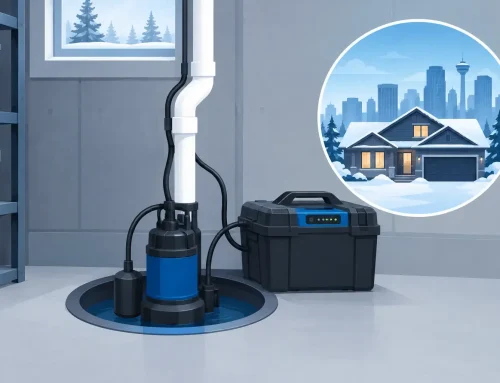
A primary sump pump depends on household power. Unfortunately, storms that bring heavy rain can also bring outages. A battery backup sump pump provides a second line of defense when the main pump cannot run or cannot keep up with incoming water.
Backup systems are especially worth considering for finished basements, homes with a history of water intrusion, properties that sit in low areas, and buildings left vacant for periods of time. Landlords and commercial property operators can also benefit from alarm-equipped backup protection because they may not be on site when the primary system fails.
A backup pump is not a substitute for a properly installed primary pump. It is a safeguard for specific failure scenarios. The battery must be tested and maintained, and the backup pump must have its own float or activation method. A system with a backup pump but a dead battery or tangled float is not reliable protection.
Why DIY Replacement Can Create Bigger Problems
Replacing a sump pump may look straightforward, but the details are where problems develop. A pump can be installed with the wrong pipe size, a loose discharge connection, an improperly positioned float, or no check valve. It may turn on during a basic bucket test, yet fail when water enters quickly during a storm.
DIY work can also overlook the underlying cause of the issue. If the pit is undersized, the drain tile is bringing sediment into the basin, or the discharge route is blocked, a new pump may have the same short life as the old one. Electrical safety is another concern in a damp basement environment.
Professional replacement provides an opportunity to inspect the whole flood-protection setup. That includes verifying the pump cycles correctly, confirming water exits where it should, and identifying whether a backup system, new basin, alarm, or discharge improvement would add meaningful protection.
Maintenance That Helps a New Pump Last
Once the replacement is complete, regular checks help catch trouble early. Test the pump periodically by adding water to the pit and watching it activate, drain the basin, and shut off. Listen for unusual sounds and make sure the float moves without obstruction.
Keep the pit reasonably clear of debris, and inspect the discharge area after major storms or spring thaw. If the system includes a backup battery, follow the maintenance schedule for that unit rather than assuming it is ready indefinitely. Property owners should also make sure anyone responsible for the building knows where the sump pump is located and what an alarm means.
A sump pump is one of the few mechanical systems that may protect thousands of dollars of finishes, belongings, and equipment in a single night. When it begins showing signs of wear, prompt service is the practical choice. Kingstree Plumbing can assess the full system, complete a dependable replacement, and help put reliable flood protection back in place before the next heavy runoff arrives.

Related Posts