

Sump Pump Battery Backup Review for Edmonton Homes
A heavy spring rain is stressful enough. A power outage during that rain is when a sump system proves whether it was designed for a real basement emergency. This sump pump battery backup review focuses on what homeowners, landlords, and property managers should evaluate before relying on a backup system to keep water out.
A battery backup is not a replacement for a properly sized primary sump pump, a clear discharge line, or correct drainage around the property. It is a second layer of flood protection. When utility power drops, the backup pump switches on and uses stored battery power to move incoming groundwater from the sump pit.
Sump Pump Battery Backup Review: The Criteria That Count
The best backup is not automatically the one with the largest battery or the loudest marketing claims. It is the system that can handle the water entering your specific pit, lift it the required distance, and alert you before a small issue becomes a flooded basement.
Start with pumping capacity. Manufacturers may list gallons per hour or gallons per minute, but those numbers only make sense when you also see the pumping head. Head is the vertical distance the pump must lift water before it reaches the discharge piping. A pump that moves a high volume at a low lift can deliver substantially less water when it must push up eight, 10, or 15 feet.
For a typical home, the primary AC-powered sump pump should do most of the work. The battery backup needs enough capacity to manage water while the power is out or while the primary pump has failed. If the pit fills quickly during a storm, a low-capacity backup may run constantly, drain the battery, and still fall behind. A professional assessment should look at pit size, incoming water volume, float settings, discharge routing, and how often the primary pump cycles during wet weather.
Runtime is more than a battery number
Battery runtime depends on how hard the pump is working. A battery rated with a high amp-hour number may sound reassuring, but it does not promise a fixed number of hours of pumping. A backup pump that cycles briefly every few minutes will last far longer than one operating continuously because groundwater is entering the pit rapidly.
The charger, controller, pump efficiency, battery condition, lift height, and discharge restrictions all affect real-world runtime. That is why a system should be selected for likely storm conditions rather than a best-case estimate on a product label.
Battery type also matters. Sealed AGM batteries are common because they are low-maintenance and suitable for indoor installation when used according to manufacturer requirements. Other systems use maintenance-free deep-cycle batteries designed for repeated discharge. The right choice depends on the backup unit’s approved battery specifications. Using an incompatible battery can reduce performance, prevent proper charging, or void equipment coverage.
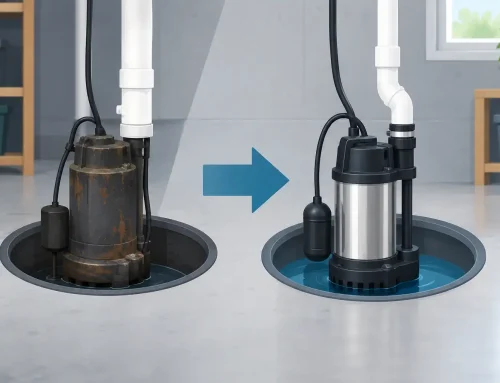
A battery has a service life. It should not be installed and forgotten until the next outage. Backup batteries gradually lose capacity, even when the system appears normal. Regular testing and scheduled replacement are part of owning a dependable flood-protection system.
The alarm may be as valuable as the pump
A backup system should tell you what is happening. Look for clear audible alarms and visual status indicators for power loss, pump operation, low battery, weak battery, charger failure, high water, and a failed or stuck float switch. Some systems can also send notifications to a phone or monitoring device.
Remote alerts are especially useful for rental properties, commercial spaces, vacant homes, and anyone who travels often. They do not stop water on their own, but they give you time to arrange service before water reaches the basement floor.
Do not assume an alarm means the backup pump is working correctly. A high-water alarm can indicate a blocked discharge line, a failed check valve, an undersized pump, a dead battery, or incoming water that exceeds the system’s capacity. Treat an alarm as a reason to investigate promptly.
Separate Backup Pump or Combination Unit?
A separate DC backup pump mounted beside the primary pump is a common setup. It provides redundancy because the backup has its own pump body, motor, switch, controller, and battery supply. If the main pump fails mechanically, the backup can still take over when water rises to its activation level.
Combination systems place a primary pump and a battery-operated backup pump in one assembled unit. They can save space and simplify installation in some pits. The trade-off is that service options and component replacement can vary by model. In a tight or unusually shallow sump pit, choosing the right physical configuration is just as important as choosing a pump rating.
The float arrangement deserves close attention. The backup float should activate above the primary pump’s normal on level, but before water reaches a dangerous height. If it is set too low, the backup may cycle unnecessarily. If it is set too high, there may be little reserve space left in the pit when a problem occurs.
Installation Details That Affect Performance
Even a strong battery backup can disappoint if the installation is incomplete. The discharge line needs to carry water away from the foundation without allowing it to return to the pit. A failed, blocked, or incorrectly installed check valve can cause water to flow backward after each pump cycle, increasing wear and draining battery power.
In the Edmonton area, discharge lines also need planning for freezing conditions. A battery backup cannot protect a basement if the outdoor discharge path is frozen solid or buried under ice. Seasonal inspection should confirm that the outlet is clear, extensions are properly sloped, and water is not being discharged beside the foundation.
The electrical side matters too. The primary sump pump should have a reliable power supply, while the backup controller and battery should be installed where they remain accessible for testing and service. Battery terminals must be protected, wiring must be secure, and the controller must be compatible with the battery selected.
A properly installed lid can also help. It reduces debris entering the pit, limits odors and humidity, and keeps the area safer for children and pets. The system still needs access for inspection, so the cover should not make maintenance difficult.
What a Professional Inspection Should Check
A useful sump inspection goes beyond pressing the test button. The technician should add water to verify that the primary pump starts, empties the pit, and shuts off as intended. The backup pump should then be tested through its controller and float mechanism, with attention to its alarm functions and battery charging status.
The inspection should also include the pit itself, discharge pipe, check valve, electrical connections, pump intake, and exterior outlet. Debris, sediment, and small objects can interfere with floats and pump intakes. A pump may sound normal while moving less water than it should.
For homes with a history of seepage, frequent cycling, or previous water damage, the inspection should include the bigger drainage picture. Eavestrough discharge, grading, foundation drainage, and the condition of the sump pit all affect the load placed on a pump. A battery backup is strongest when it supports a complete water-management plan.
Who Needs a Battery Backup Most?
A backup system is a practical choice for homes with finished basements, properties in areas with high groundwater, and buildings where a power interruption could happen during a major storm. Landlords and commercial property operators often benefit from the added alarms and redundancy because a delayed response can affect multiple occupants or disrupt operations.
It is also worth considering for properties where the primary pump runs regularly in spring or after prolonged rain. Frequent cycling is a sign that the sump system is doing meaningful work. If power fails at the wrong moment, there may be little time before water rises.
For rural properties, the assessment can be more complex. Private drainage, well equipment, generator capacity, and site grading may all influence the best backup strategy. In some cases, a generator connection or a higher-capacity water-powered solution may be considered alongside a battery system, depending on the property’s water supply and local installation requirements.
Make the Backup Part of the Maintenance Plan
Test the system on a schedule, not only when storm clouds appear. Check the controller indicators, confirm the battery is charging, listen for alarms, and keep the sump pit and discharge route clear. If the unit reports a low battery or pump fault, arrange service before the next heavy rainfall.
Kingstree Plumbing can inspect the full sump system, install or replace battery backup equipment, and identify drainage or discharge issues that could limit its performance. The goal is not simply to add a battery. It is to give your basement a dependable response when the power goes out and water keeps coming.

Related Posts