

Basement Flood Prevention Example for Edmonton Homes
A finished basement can go from family room to cleanup site in one heavy storm. This basement flood prevention example shows how an Edmonton-area homeowner can reduce risk before spring thaw, summer downpours, or a sewer backup puts flooring, drywall, belongings, and electrical systems at risk.
The key is not one product or one repair. Reliable flood protection starts outside the home, continues through the drainage system, and includes a plan for power outages and plumbing failures. The right setup depends on the age of the property, the grading of the lot, the condition of the sewer line, and whether the basement has a sump pit.
A basement flood prevention example in a typical home
Consider a 1980s Sherwood Park home with a finished basement, mature landscaping, and a sump pump that has never been replaced. The homeowner notices damp spots near one basement wall after large storms. During spring melt, the sump pump runs frequently, and one downspout empties beside the foundation.
Nothing may look urgent on a dry day. But several small weaknesses can line up during a storm: roof water saturates the soil at the foundation, surface water moves toward a low point in the yard, the sump pump runs continuously, and a power interruption stops it when it is needed most. If the municipal sewer is also under pressure, a floor drain or lower-level fixture can become a path for contaminated wastewater.
A practical prevention plan addresses each route water can take into the house.
Start with the roof and grading
The first repair in this example is simple: extend downspouts so water discharges well away from the home. A splash block alone may not be enough if it lets water pool beside the foundation. Downspout extensions should direct water toward a safe drainage area, not a neighbor’s property or a walkway where it can create ice.
Next, check the soil grade around the foundation. Ground should slope away from the home so rain and meltwater move outward rather than collecting against the basement wall. Landscaping settles over time, especially around older homes and after utility work. Adding and compacting suitable soil can correct localized low spots, but it is not a substitute for diagnosing an active foundation or drainage problem.
This work has a trade-off. Routing more water away from the house is useful only when the discharge area can handle it. A yard with poor drainage, heavy clay soil, or a low-lying lot may need a more deliberate drainage solution instead of simply sending water farther across the lawn.
Inspect and protect the sump system
The sump pump is the heart of many basement flood prevention plans. In this example, a plumbing technician inspects the pit, pump, float switch, discharge pipe, and check valve. The pump should activate before water reaches a dangerous level, move water effectively, and shut off properly after the pit drains.
A pump that runs but does not discharge water may have a frozen, blocked, disconnected, or improperly routed line. A pump that cycles constantly may be handling heavy groundwater, but it can also point to a faulty check valve, an undersized pump, or a float issue. These conditions deserve attention before the next major storm.
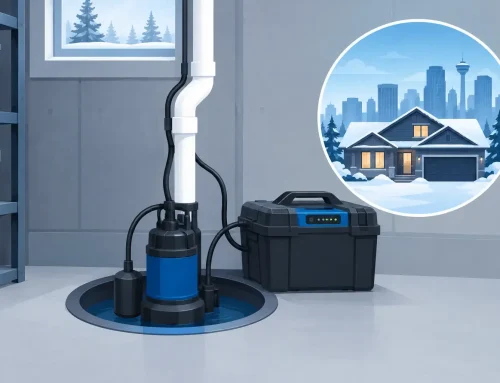
The homeowner also adds battery backup. A primary sump pump cannot protect the basement during a power outage if it has no backup power source. A battery backup system provides another level of protection, while an alarm can warn the owner when water rises too high or the pump fails. Some properties may benefit from a secondary pump as well, particularly where groundwater is high or the home has a large drainage load.
Backup systems need maintenance too. Batteries lose capacity, alarms need testing, and pumps eventually wear out. Testing the pump by adding water to the pit is a straightforward seasonal check, but a professional inspection is valuable when a system is aging, cycling unusually, or protecting a finished basement with significant value.
Stop sewer water from coming back inside
Groundwater and rainwater are not the only flood threats. During intense rain events, municipal sewer systems can become overwhelmed. If a home has a lower-level bathroom, laundry area, or floor drain, sewage backup can cause extensive and hazardous damage.
For this homeowner, the next step is evaluating a backwater valve. This device is designed to help prevent wastewater from flowing backward from the sewer line into the home. It is particularly relevant for properties in areas with known sewer backup history, homes with below-grade fixtures, and buildings where a basement flood would interrupt tenants or business operations.
A backwater valve is not a fit-and-forget device. Its flap must remain clean and able to close. Debris, grease, wipes, or sediment can interfere with operation. During a severe sewer event, the valve may close and temporarily prevent the home from draining to the public sewer, so occupants should avoid running showers, toilets, washing machines, and dishwashers until the risk has passed.
That limitation is worth understanding. The valve helps keep sewage out, but it also changes what the household can safely send down the drain while it is closed.
Check the drains before they become an emergency
The prevention plan continues with a sewer camera inspection and drain cleaning when the home has warning signs. Slow drains, recurring clogs, gurgling fixtures, sewer odors, or water appearing near a floor drain can indicate a restriction in the line.
In older Edmonton-area neighborhoods, tree roots can enter sewer pipes through joints or cracks. Scale buildup, damaged pipe sections, and improper previous repairs can restrict flow as well. A camera inspection identifies the condition and location of the issue, which helps avoid guessing at a repair. Depending on the findings, cleaning, hydro jetting, spot repair, or replacement may be appropriate.
Homeowners should also keep floor drains clear. Do not store boxes, rugs, or furniture over them. If water reaches the basement, a clear floor drain may help it escape rather than spread across the room. A dry floor drain can allow sewer gas into the space, so periodically adding water to its trap may be necessary when it is rarely used.
Seasonal maintenance that makes the system dependable
Flood prevention works best as a routine, not as a last-minute response to dark clouds. Before spring melt, inspect downspouts, clear ice and debris from discharge areas, test the sump pump, and make sure the pit cover is secure. In summer, watch for pooling water after rain and check that exterior drainage has not been blocked by landscaping changes.
In fall, remove leaves from eavestroughs where safe to do so and keep discharge routes open before freezing temperatures arrive. Winter brings a different concern: a sump discharge line can freeze at the outlet, leaving the pump with nowhere to send water. If the pump runs continuously or sounds different than usual, arrange service promptly.
For landlords and property managers, document these checks and make sure tenants know where the electrical panel, sump alarm, and emergency shutoffs are located. In commercial and multi-unit buildings, scheduled drainage maintenance can prevent a localized backup from becoming an expensive closure.
Know when to call for help
Call for professional plumbing service when the sump pump will not run, runs without moving water, cycles excessively, or has no backup during a known risk period. Immediate help is also needed for sewage smells, water rising from a floor drain, repeated drain backups, or visible water entering the basement.
Kingstree Plumbing can inspect sump pumps, install backup protection, assess backwater valve needs, clean and inspect sewer lines, and respond when a drainage failure becomes urgent. Acting while the issue is still small gives you more options than waiting until water reaches the basement floor.
A dry basement is rarely the result of luck. It comes from directing water away from the home, keeping drainage equipment ready, and fixing small warning signs before the next storm tests every part of the system.

Related Posts