


Stay Warm: Edmonton Furnace Inspection Checklist You Need
Nearly seven in ten Edmontonians rely on a central furnace to carry them through long winters. A properly tuned system can lower your heating bills by up to 30% and reduce emergency breakdowns by 95% (ProSolutions Heating & Cooling). Good news, this is easier than it sounds. This Edmonton furnace inspection checklist helps you cover every critical step before the cold snaps arrive. For a deeper walk-through or to book a detailed review, see Kingstree Plumbing’s furnace inspection service in Edmonton.
Benefits of furnace inspection
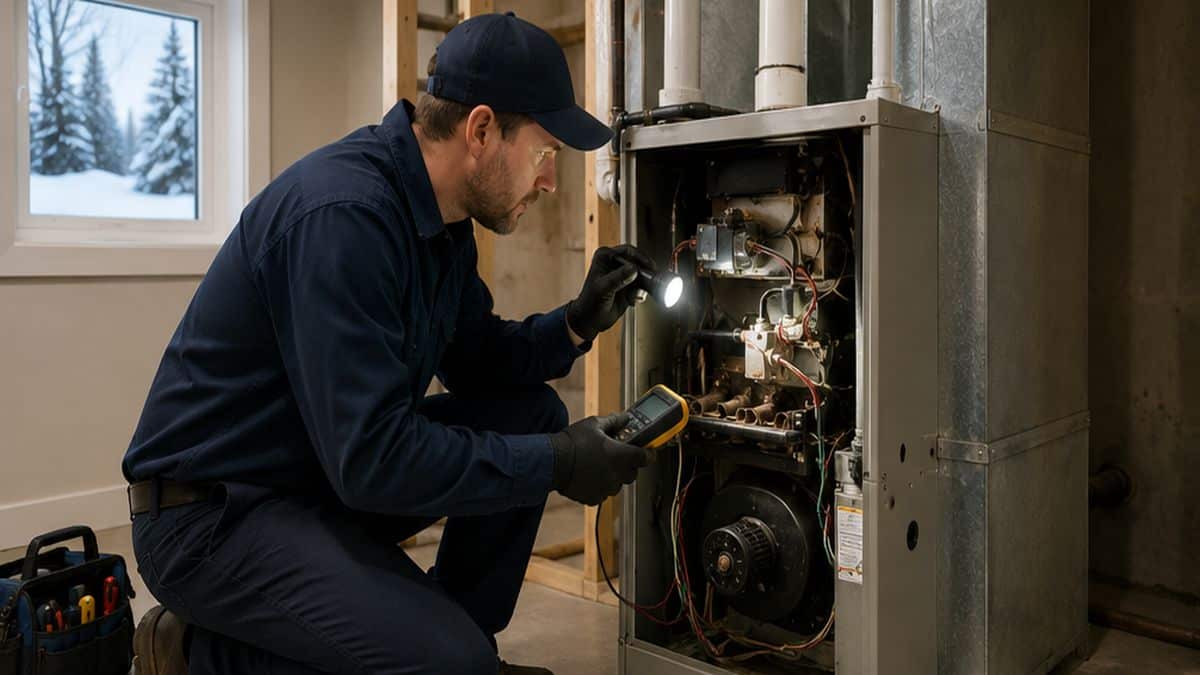
Furnace Inspections in Edmonton start with safe preparation; this Furnace Inspection scene shows essential tools and protective gear beside the furnace.
- Extend system lifespan by spotting minor issues early
- Improve energy efficiency, cutting utility costs by as much as 30% (ProSolutions Heating & Cooling)
- Reduce unplanned repairs by up to 95% (ProSolutions Heating & Cooling)
- Maintain better indoor air quality by keeping dust and debris out of vents
A 2023 industry survey found that furnaces serviced before winter ran 15% more efficiently than those serviced mid-season. That efficiency gain adds up over Edmonton’s six-month heating period. You’ll worry less about surprise breakdowns, and breathe easier all winter long.
Preparing for your inspection
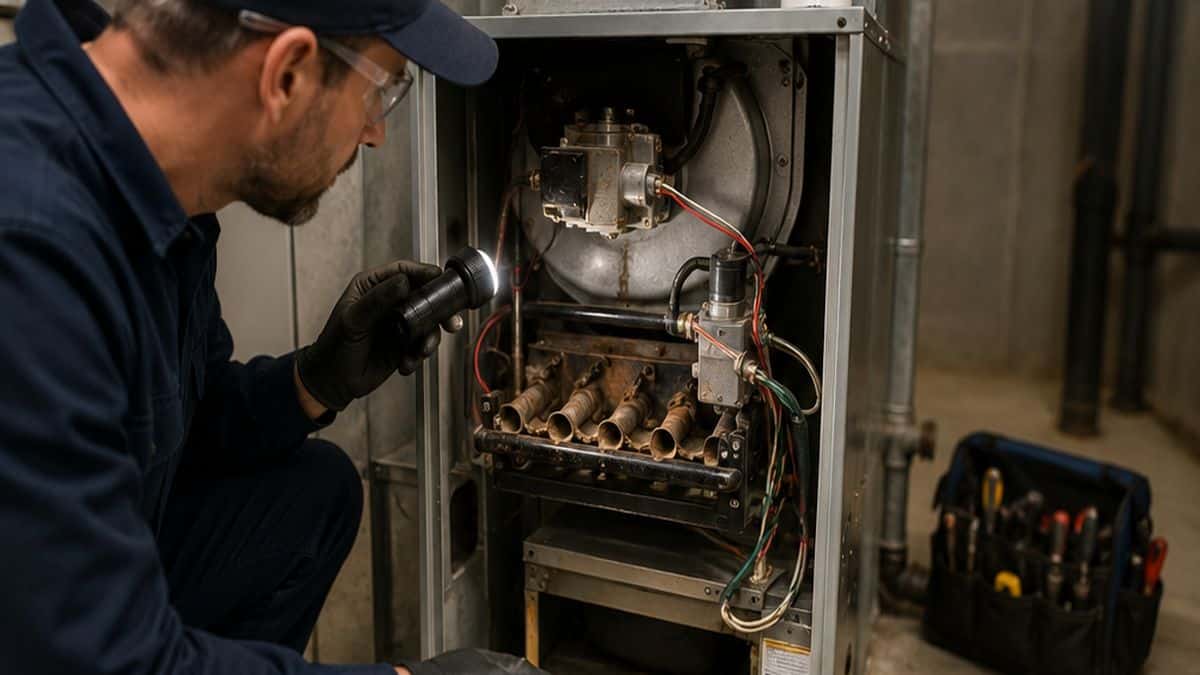
Furnace Inspections in Edmonton conclude with a clear system review; this Furnace Inspection scene shows a clean furnace and homeowner consultation.
Tools you’ll need
- Drop cloth or sheet to catch debris
- Screwdrivers (flat and Phillips) for panel removal
- Vacuum with brush attachment for dust cleanup
- Soft cloths and mild detergent for surface cleaning
- Flashlight to inspect dark areas
Safety precautions
- Turn off power at the furnace switch or breaker (this cuts electrical risk)
- Shut off the gas valve if you’ll probe burners or gas lines
- Let the unit cool for at least 15 minutes after shutdown
- Wear gloves and a dust mask if your system hasn’t been cleaned in a year
Taking these steps prevents injuries and keeps your inspection focused on performance rather than unexpected hazards.
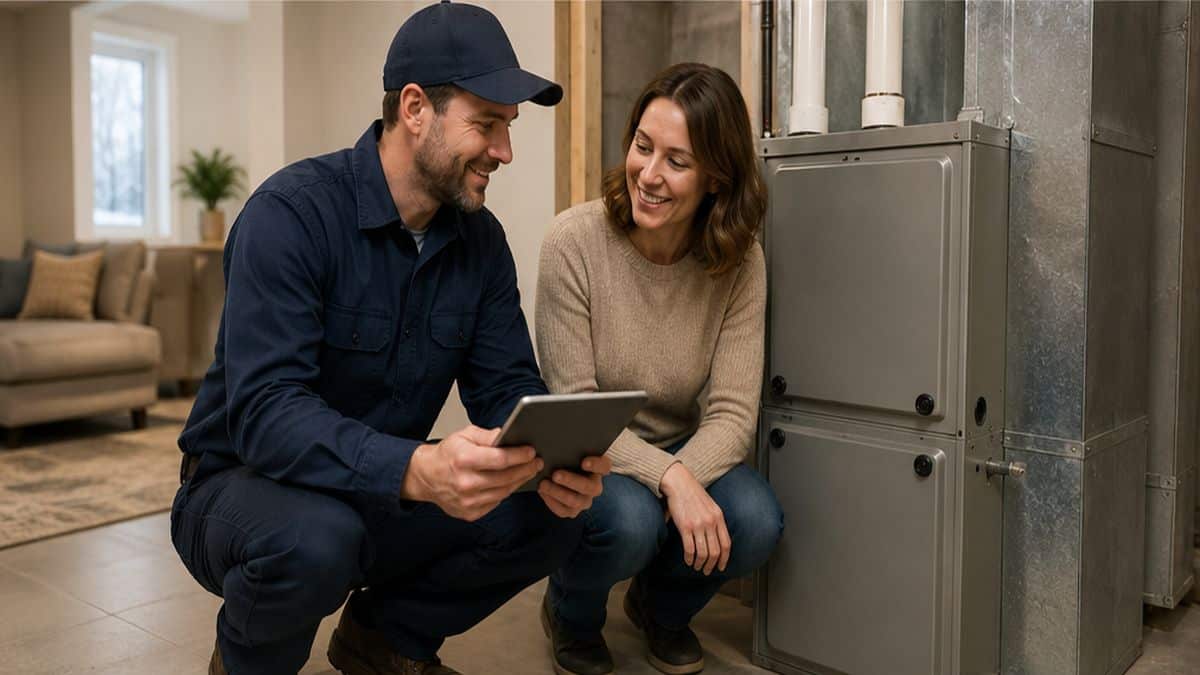
Furnace Inspections in Edmonton include careful component checks; this Furnace Inspection scene shows burners, wiring and internal furnace parts being examined.
Key inspection tasks
Once you’ve prepped your workspace and tools, follow these tasks in order. You can tick them off as you go.
Visual check
- Remove the furnace access panel.
- Inspect the heat exchanger for cracks or corrosion.
- Check vents, flame sensor, burners and blower housing for dust or soot.
- Look for signs of rust or water leaks around the cabinet.
A 12-point visual inspection like this is standard in Edmonton (Always Plumbing). It often reveals wiring issues or blocked airflow before they cause bigger problems.
Performance tests
- Turn the furnace back on and set the thermostat to a high heat setting.
- Listen for unusual noises such as rattles or squeals.
- Measure temperature rise across the furnace (ideal range: 30–50°F).
- Check that air blows steadily from each register—weak airflow signals duct restrictions.
Proper function here confirms your unit is moving heat as designed. If temperature rise falls outside the recommended window, you may need professional tuning.
Safety control tests
- Test the limit switch by blocking airflow briefly; the furnace should shut off safely.
- Verify the flame rollout switch trips if a burner flame spills over the combustion chamber edge.
- Inspect the carbon monoxide detector and replace its batteries if older than six months.
These safety devices protect against fires and toxic gas buildup (Kingstree Plumbing).
More Furnace & HVAC Resources in Edmonton
- Edmonton Furnace Inspection Checklist
- Professional Furnace Inspections in Edmonton
- Furnace Maintenance Tips for Edmonton Homes
- Edmonton Furnace Inspection Services
- Choosing an HVAC Company in Edmonton
Navigating local requirements
Edmonton’s building codes and permit process ensure safety in every home. Skipping steps may delay your project or incur fees.
Permit requirements
Any work on fuel-burning appliances usually requires a permit. Before beginning:
- Review manufacturer instructions and code provisions (InterNACHI).
- For Alberta guidance on gas installation standards, review the Government of Alberta gas codes and standards list before scheduling work.
- Obtain a heating and ventilating permit via Self-Serve or by calling 311.
- Note required inspection stages in your online Self-Serve profile.
Failure to pull a permit can lead to costly re-work, including wall removal or redo of completed work (City of Edmonton).
Inspection scheduling
Safety Codes inspectors may arrive without notice. To stay ready:
- Keep work areas clear and accessible at all times.
- Request, cancel or reschedule inspections through Self-Serve or by phone.
- Expect methods such as in-person checks, remote video inspections or even AI-driven review (SCIE) for single houses (City of Edmonton).
A smooth permit process means fewer delays and avoids stop-work orders.
Next steps and resources
You’ve covered all key steps, and your furnace is in good shape for Edmonton’s winter. Here are your options for ongoing care:
- For regular upkeep, see our furnace maintenance Edmonton guide
- Need expert help? Explore our furnace inspection services Edmonton page
- Find certified technicians through professional furnace inspection Edmonton
- Compare local providers on Edmonton HVAC companies
When you’re ready, consider booking a full service with Kingstree Plumbing’s furnace inspection service in Edmonton. Their certified technicians handle inspections, cleaning and tune-ups year-round. You’ll gain peace of mind knowing your home stays safe, efficient and warm.
Need Furnace Inspections in Edmonton? Call now or Book Online.
FAQs
How often should I inspect my furnace?
Most experts recommend an annual inspection before the first cold snap. High-use systems or older units may benefit from biannual checks.
Can I do a DIY inspection safely?
Yes, as long as you follow safety steps—power off, gas off, protective gear—and stick to visual and basic performance checks.
What’s the difference between inspection and tune-up?
An inspection identifies issues and tests safety controls. A tune-up goes further, cleaning components and calibrating controls for peak efficiency.
How much does a professional inspection cost in Edmonton?
Typical inspection fees range from $70 to $150. Inspections with a basic tune-up can reach $300 (Always Plumbing).
What if my furnace fails inspection?
A failed outcome usually notes specific deficiencies. Address the issues—often simple fixes like cleaning or part replacement—then request a follow-up inspection.
Share This Story, Choose Your Platform!
About the Author: Brett Kingstree

Related Posts




