


Essential Tips for Pressure Tank Troubleshooting in Edmonton
Nearly half of all home water systems use a pressure tank to smooth out pump cycles, guard against pump burnout, and keep your showers flowing steadily. In Edmonton’s cold winters and spring thaw, your tank works harder to balance shifting pressure. That is why pressure tank troubleshooting Edmonton homeowners rely on can save you from sudden low pressure, noisy cycles, or costly repairs. If you need professional backup, consider reaching out to Kingstree Plumbing’s Pressure Tank Installation & Replacement in Edmonton for prompt, reliable solutions.
Good news, you don’t need a plumbing degree to get started. With a few simple checks and a basic pressure gauge, you can spot early warnings, adjust air charges, and extend your tank’s lifespan.
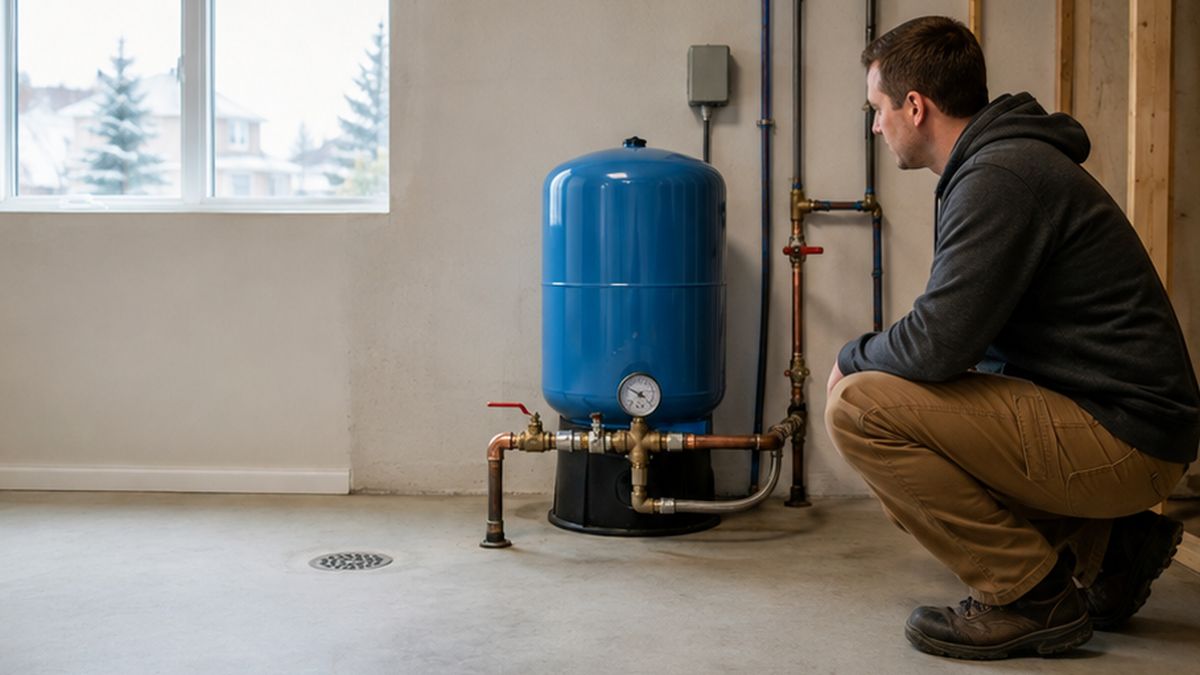
Pressure Tank Installation & Replacement in Edmonton is shown during a Pressure Tank Troubleshooting inspection. A pressure gauge check helps identify abnormal pressure and cycling problems.
Understand tank basics
A pressure tank uses a rubber bladder or diaphragm to separate water and air. When your pump fills the tank, it compresses the air cushion. Once pressure hits the cut-off point (say 50 psi), the pump shuts off. When you open a tap, water leaves until pressure hits the cut-on point (for example 30 psi), and the pump kicks back in. This cycle prevents constant on/off pumping, which can wear out your pump motor.
• Most well tanks last 5 to 15 years before the bladder weakens or rust sets in (PVC Fittings Online).
• Pre-charge (the air pressure in an empty tank) should sit about 2 psi below the cut-on setting (per the Amtrol Well-X-Trol installation manual).
Spot warning signs
Catching issues early can keep small fixes cheap. Watch for:
- Unusual noises. Humming, thumps, or bangs often signal waterlogging or air charge loss (The Pump House).
- Rapid cycling. If your pump turns on and off more than 10 to 15 times per hour, the tank bladder may be failing.
- Drips or puddles. Even small leaks around fittings or the tank base point to seal or diaphragm damage.
- Fluctuating pressure. When two taps run and pressure drops dramatically you may have a clogged filter, leak, or tank issue (Capital Plumbing & Heating).
Perform basic troubleshooting
Before you call a pro, try this quick table to narrow down the cause:
| Symptom | Possible cause | Quick fix |
|---|---|---|
| Rapid pump cycling | Waterlogged tank bladder | Drain tank, recharge air |
| Low water pressure | Leaks or bladder failure | Inspect seals, patch leaks |
| Humming or banging noises | Air charge loss | Check gauge, add air |
| Frequent on/off switching | Wrong pre-charge setting | Adjust to correct psi |
Steps to follow:
- Inspect fittings for drips or corrosion.
- Listen to the pump cycle and take note of irregular sounds.
- Check the pressure gauge on the tank. If it reads zero or erratic values, it may be faulty.
- Record how many times the pump cycles in an hour (the motor should not cycle more than 15 times).
Adjust tank pressure
An incorrect air charge often underlies many pressure tank problems. Here is how to test and reset it:
- Turn off the pump’s breaker and open a faucet to drain water from the tank.
- Use a tire gauge on the air valve (top of tank) to read pre-charge pressure.
- Compare to 2 psi below your cut-on point (for a 30/50 switch, aim for 28 psi).
- Add air with an air compressor or bicycle pump if needed. Bleed excess air if it’s too high.
- Restore power and check cycles.
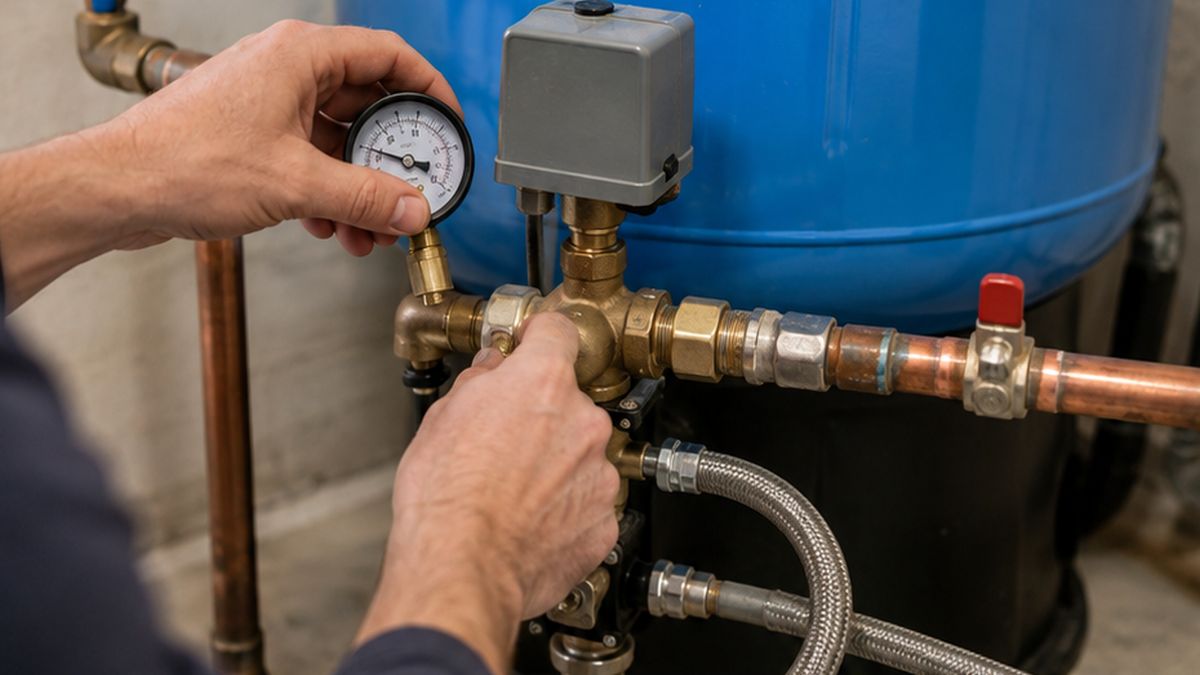
Pressure Tank Installation & Replacement in Edmonton is shown during Pressure Tank Troubleshooting as the tank pre-charge is checked and adjusted. The close-up emphasizes the air valve and pressure gauge.
Recommended pre-charge settings
| Switch setting (psi) | Pre-charge (psi) | Use case |
|---|---|---|
| 20/40 | 18 | Small cabins, low demand |
| 30/50 | 28 | Standard homes |
| 40/60 | 38 | High-demand or irrigation |
Drain and clean tank
Sediment and bacteria can build up in your tank, leading to rust and poor water quality. Aim to flush your tank every 1 to 2 years:
- Shut off pump power and close the water supply valve at the bottom of the tank.
- Attach a hose to the drain port and run it to a floor drain or outside.
- Open the drain valve and let water flush out until clear.
- Close the drain, open the supply valve, and restore power.
Draining removes sediment before it damages the bladder or tank lining ([The Pump House]).
Plan routine maintenance
Regular checkups in spring and fall help you adapt to Edmonton’s climate swings. Consider:
- Annual inspection of valves, fittings, and the pressure gauge.
- A spring check after melting snows, when city hydrant testing can baffle your system.
- A fall tune-up to prepare for subzero temperatures that might affect air charge.
For a deep dive into your overall water system, see our guide on edmonton water system pressure tanks. A simple annual tune-up could add years to your tank life.
Helpful Pressure Tank Guides for Edmonton
- Avoid Common Pressure Tank Installation Mistakes
- Know When Your Pressure Tank Needs Replacement
- Prevent Water Pressure Tank Problems
- Choose the Right Pressure Tank Specialist
- Pressure Tank Troubleshooting Tips
Contact local specialists
Some issues need pro tools or expertise. Reach out if you have:
• Persistent leaks you can’t patch
• A blown or waterlogged bladder (replacement needed)
• A faulty pressure switch or gauge
• Freeze damage from Edmonton’s deep winter cold
Edmonton homeowners can also reduce winter risk by following EPCOR’s frozen pipe prevention tips, especially for exposed lines and draft-prone areas.
Local experts can handle complex repairs, full tank replacement, or new installations. For trusted support, check edmonton water pressure tank specialists or explore edmonton pressure tank replacement services. If you’re adding a new system altogether, learn more about pressure tank installation in edmonton.
Recap and next steps
You’ve learned how to spot leaks, test and adjust air charges, drain sediment, and plan proactive checks. Start by inspecting your tank this weekend, then schedule your spring maintenance to keep your water pressure steady year-round.
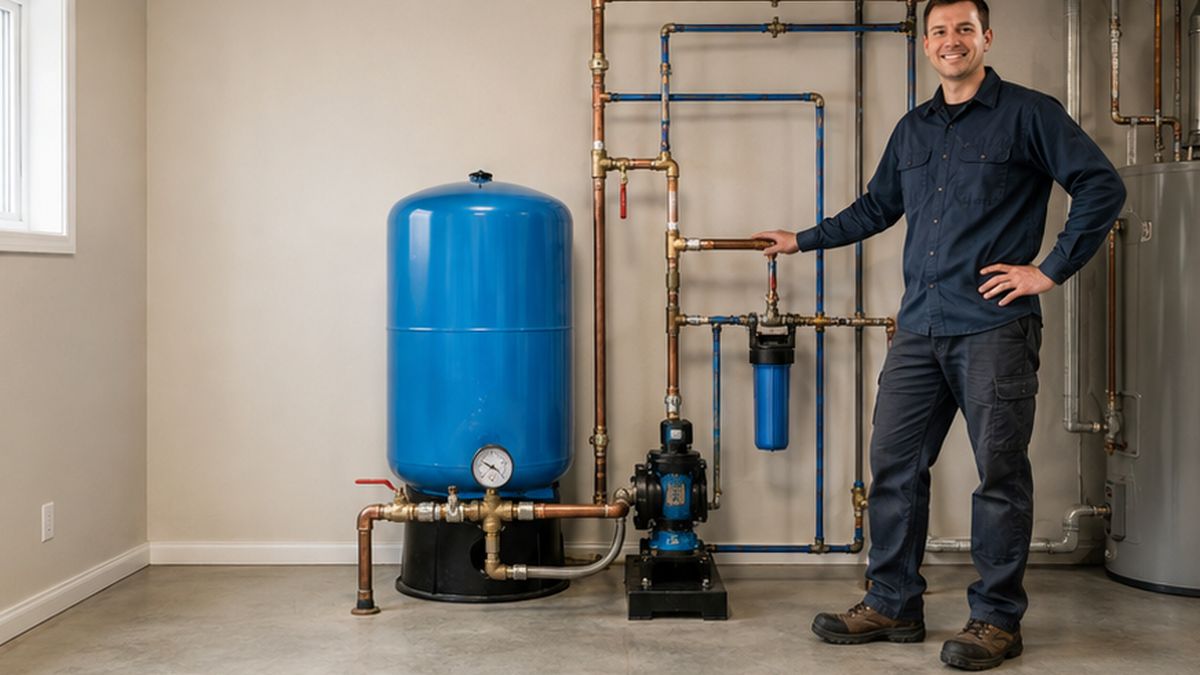
Pressure Tank Installation & Replacement in Edmonton is shown after successful Pressure Tank Troubleshooting. The finished system has secure fittings, stable pressure, and a clean workspace.
Need Pressure Tank Installation & Replacement in Edmonton? Call now or Book Online.
Frequently asked questions
What causes rapid pump cycling in a pressure tank?
Rapid cycling often means the bladder has lost its air cushion or waterlogging has occurred. Drain the tank and reset the air charge, or call a specialist if the issue persists.
How often should I check my pressure tank pressure?
Test pre-charge every 6 to 12 months. Seasonal shifts in Edmonton’s climate can alter air pressure faster, so a spring and fall check helps you stay ahead.
What is the ideal pre-charge pressure?
Set the air charge about 2 psi below your pump’s cut-on pressure (for a 30/50 switch, aim for 28 psi). This ensures your pump cycles correctly and avoids short cycling.
Can I adjust the pressure tank myself?
Yes, with basic tools: a tire gauge, bicycle pump or air compressor, and a little patience. Always turn off pump power before you work on the tank.
When should I replace my pressure tank?
Look for signs like constant cycling, rusty water, frequent leaks, or a bladder failure. Most tanks last 5 to 15 years. If troubleshooting doesn’t help, it’s time for a replacement.
Share This Story, Choose Your Platform!
About the Author: Brett Kingstree

Related Posts




