


Quick Solutions for Pressure Tank Troubleshooting in Edmonton
Nearly every Edmonton homeowner with a private well system will run into pressure tank hiccups at some point. Nuisance banging under the sink, sudden drops in shower spray, or a pump that seems to run all the time often trace back to a misbehaving pressure tank. When water hammer hits (that knocking noise you hear), pressure inside your pipes can climb to more than ten times their normal level (Fresh Water Systems). Good news, you can handle most of these checks yourself. We’ll walk you through quick troubleshooting steps—then share when to lean on a pro like Kingstree Plumbing’s pressure tank repair and service in Edmonton.
Key idea: a few simple tests—spotting symptoms, checking valves, measuring tank pressure, and swapping small parts—solve the majority of common pressure tank issues.
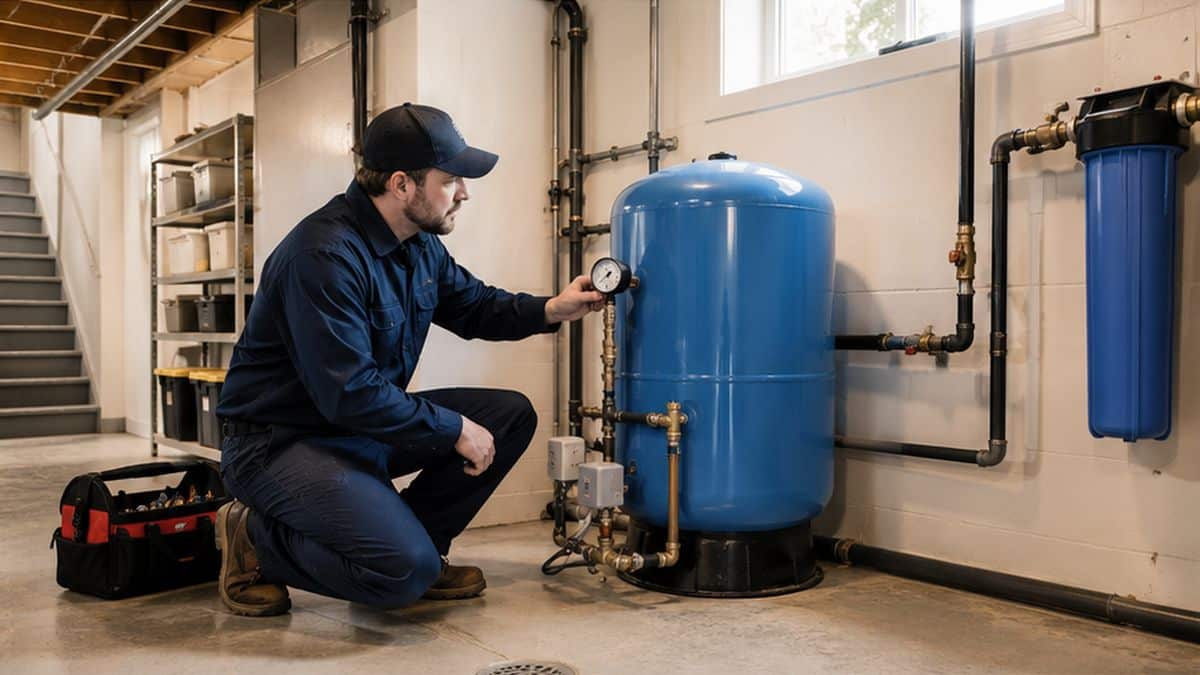
Pressure Tank Repair & Service in Edmonton begins with checking gauges, valves and common warning signs. This visual supports Pressure Tank Troubleshooting for homeowners.
Identify telltale signs
Before you roll up your sleeves, listen and look for these red flags (Mr. Rooter Plumbing):
- Fluctuating water flow – Your faucet switches from weak trickle to surge.
- Frequent pump cycling – The well pump turns on and off more than 4–5 times per minute.
- Loud banging or knocking – Water hammer can spike pressure up to ten times normal levels.
- Leaks or moisture at the air valve – Dampness around the Schrader valve often means a ruptured bladder.
- Unexpected air sputters – Tiny bursts of air at taps signal too much air in your lines.
Pay special attention during Edmonton’s freeze-thaw swings (winter and early spring). Temperature changes can shift air and water balance inside your tank, making these symptoms pop up more often.
Verify shut-off valve
A partly closed main valve is an all-too-common culprit for low or erratic pressure (EPCOR water shutoff valve guidance). Follow these steps:
- Locate your valve near the water tank in the basement or just below the water meter outside.
- Ensure the handle is fully parallel with the pipe (that means “open”).
- Open and close it fully once, then return it to the open position.
- Run a faucet to see if pressure stabilizes.
If your pressure woes vanish, you’ve found the fix. If not, move on to the tank itself.
Measure tank air charge
Your pressure tank uses air to cushion and deliver water. Too little air (waterlogged tank) or too much air can throw off performance. A common manufacturer guideline is setting the tank’s empty pre-charge pressure 2 psi below the pressure switch cut-in point (Amtrol Well-X-Trol manual).
Find cut-on and cut-off points
- Check your pressure switch cover (often labelled “cut-on” and “cut-off”).
- Typical settings: 30/50 psi or 40/60 psi.
If your switch reads 30/50 psi, the tank’s air charge should be 28 psi.
Adjust the air bladder
- Turn off power to the well pump at your breaker panel.
- Open a nearby faucet to drain water from the tank until the gauge reads zero.
- Remove the Schrader (air) valve cap and attach a tire pressure gauge.
- Pump in or let out air until you hit the target psi.
- Replace the cap, restore power, and test your water flow.
An accurate air charge cuts pump wear, curbs short cycling, and keeps pressure steady. 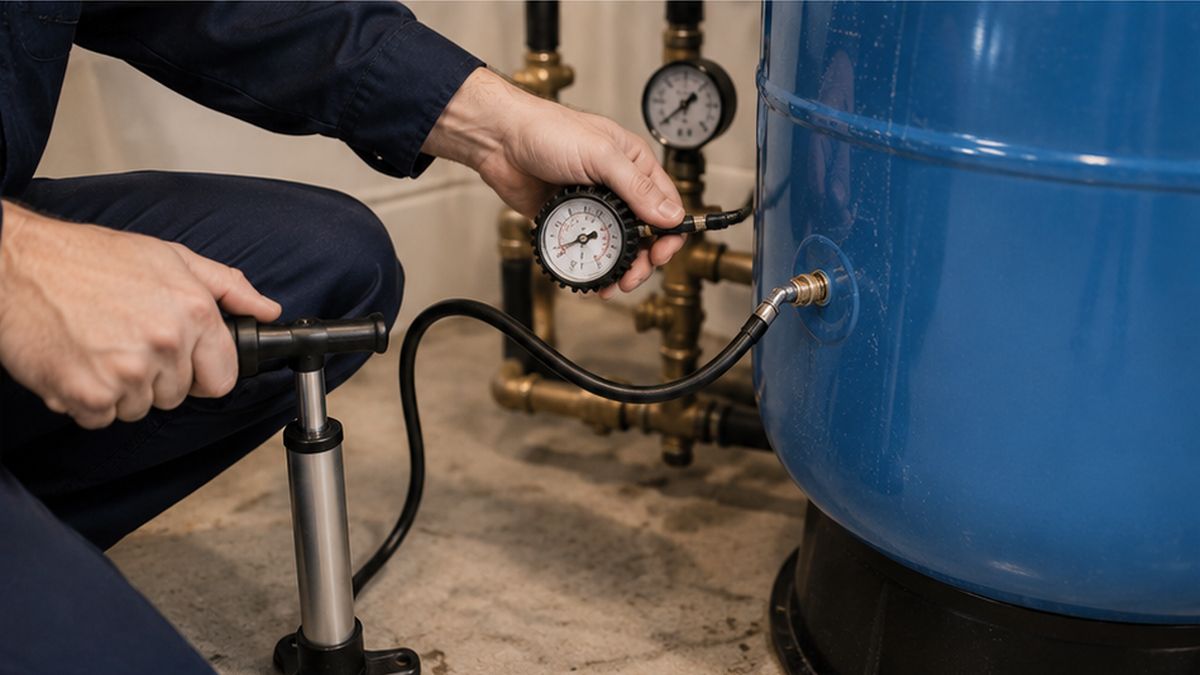
Flush waterlogged tanks
A waterlogged tank holds too much water and too little air. Common causes include a ruptured bladder or lost air volume in older tanks. You’ll often see these signs:
- Pump running almost nonstop.
- Rapid on/off cycles.
- Wet valve area.
To clear minor waterlogging:
- Shut off the pump and drain the tank completely.
- Allow it to re-fill with water, then drain again.
- Repeat until you see the correct air charge on your gauge.
If symptoms return within days, your bladder is likely compromised and the tank needs replacement. For a full system check, consider scheduling edmonton pressure tank inspection services.
Evaluate valve and switch
Small parts can cause big headaches. Two usual suspects:
- Foot valve – Located at the well intake, it keeps water from flowing back down. A broken foot valve lets water escape, causing the pump to run constantly (and spike electricity usage).
- Pressure switch – Triggers pump on and off at set thresholds. A faulty switch can short-cycle your pump and cause erratic pressure.
Typical replacement costs (parts only) range from $20 to $40 for foot valves and pressure switches. Including labor, expect $120–$250 total (Fresh Water Systems). If you’re handy:
- Turn off power and release pressure by opening a faucet.
- Remove the old valve or switch.
- Install the new component per manufacturer instructions.
- Restore power and test.
If you spot corrosion, frayed wiring, or you’d rather skip this step, reach out for professional pressure tank repair in Edmonton.
Assess need for expert service
You’ve tried the basics—now decide if you need a pro:
- Persistent banging or leaks around the tank.
- Leaks at pipe joints or tank seams.
- No improvement after pressure adjustments.
- Visible corrosion or tank bulges.
- Electrical wiring concerns near the switch.
A certified plumber can run advanced diagnostics, swap your tank if needed, and confirm full compliance with local codes. For prompt, reliable help, contact pressure tank service in Edmonton.
More Pressure Tank Resources for Edmonton Homes
- Pressure Tank Issues That May Need Service
- Signs It’s Time for Expert Tank Repair
- What Happens During a Pressure Tank Inspection
- Easy Ways to Maintain Your Pressure Tank
- Quick Help for Pressure Tank Problems
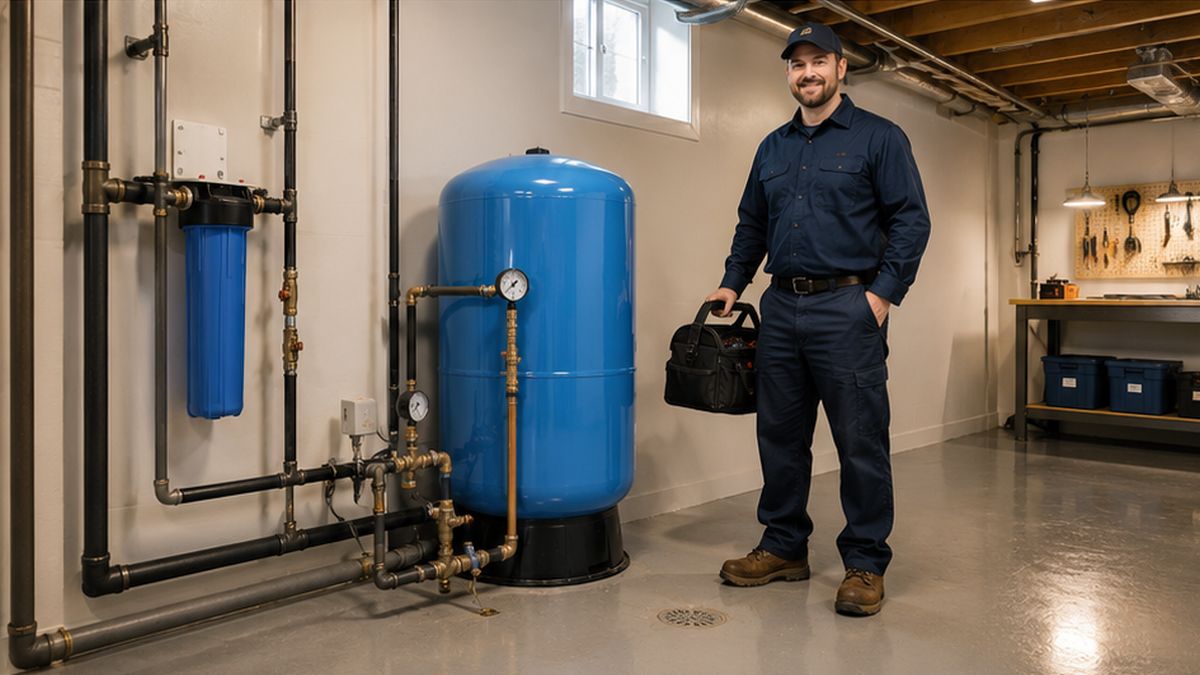
Completed Pressure Tank Repair & Service in Edmonton leaves the system clean, dry and operating at steady pressure. The scene shows the result of effective Pressure Tank Troubleshooting.
Quick recap and next step
- Spot common symptoms like water hammer and rapid cycling.
- Verify your main shut-off valve is fully open.
- Measure and adjust your tank’s air charge (2 psi below cut-on).
- Flush waterlogged tanks or replace a ruptured bladder.
- Swap out faulty foot valves or pressure switches.
- Call a pro when simple fixes don’t cut it.
You’ve got this—small checks often restore steady water flow. Need Pressure Tank Repair & Service in Edmonton? Call now or Book Online.
Frequently asked questions
How can I tell if my tank is waterlogged?
You’ll notice rapid pump cycling, a constant run-time and low air gauge readings. Trapped water leaves too little cushion.
What psi should my pressure tank air charge be?
Set the empty tank’s pressure two psi below your switch’s cut-on point (for a 30/50 psi switch, target 28 psi).
Can I adjust the tank air charge myself?
Yes, use a tire gauge and pump (air compressor or hand pump). Always power off the pump and drain the tank first.
How often should I schedule maintenance?
Aim for an annual check of air charge, valves and switches. You can book edmonton pressure tank maintenance to keep things running smoothly.
When should I call a professional?
Reach out if leaks persist, you spot corrosion, electrical wiring looks unsafe, or your own fixes don’t restore pressure. Consider professional pressure tank repair in Edmonton.
Share This Story, Choose Your Platform!
About the Author: Brett Kingstree

Related Posts