


Avoid Common Mistakes in Pressure Tank Installation in Edmonton
Good news, this is easier than it sounds. Pressure tank installation in Edmonton can cost around $500 on average to replace (though prices range from $300 to $700 depending on tank size, capacity, and labour rates) (Angi). Getting the basics right will save you time, money, and a headache down the road. Whether you’re replacing an ageing bladder tank or installing one for the first time, avoiding these common mistakes sets you up for steady water pressure and longer pump life. For expert support, you can trust Pressure Tank Installation & Replacement in Edmonton from Kingstree Plumbing.
Plan for the right tank size
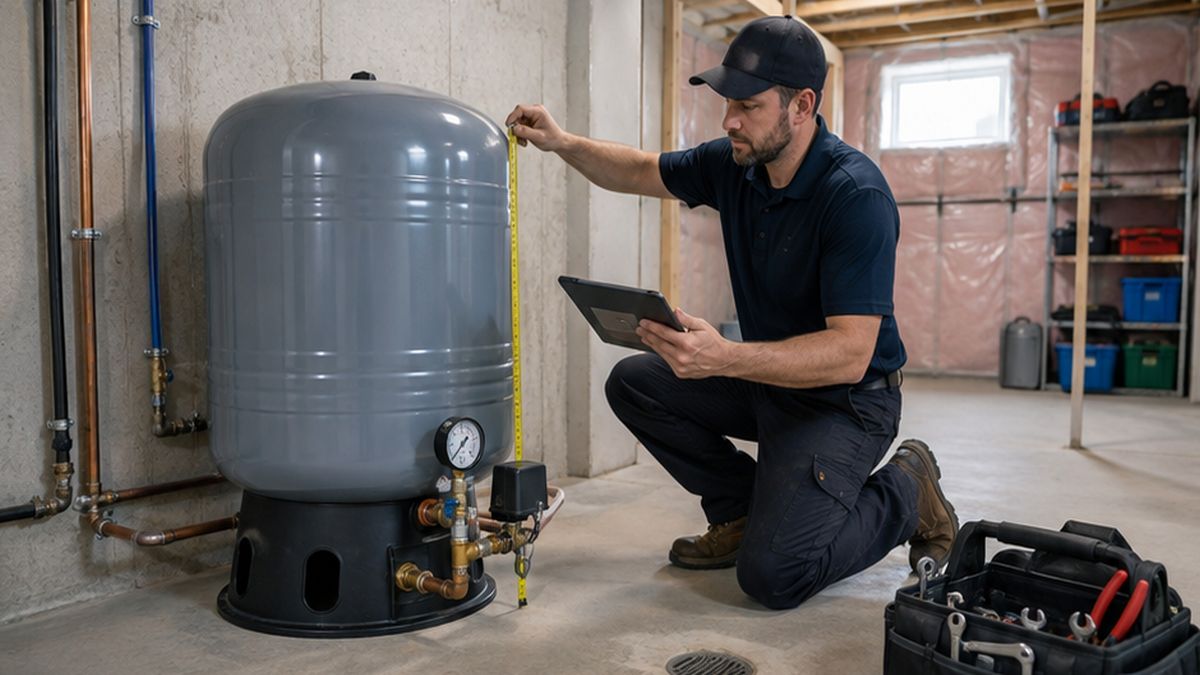
A plumber evaluates tank capacity and pump requirements for Pressure Tank Installation & Replacement in Edmonton. Proper sizing helps ensure an efficient Pressure Tank Installation.
Choosing the wrong tank size is one of the biggest pitfalls. An undersized tank leads to rapid pump cycling, which wears out your pump motor faster. An oversized tank can mean wasted space and unnecessary cost.
Key sizing factors
For a deeper breakdown of tank types, sizing, and how they support your well setup, read Edmonton water system pressure tanks.
- Building demand: number of bathrooms, appliances, irrigation lines
- Pump flow rate: gallons per minute (GPM) your pump delivers
- Drawdown capacity: water volume delivered between pump cycles
A general rule is to size your tank so it has enough drawdown for two or three fixture operations (for example, a shower and a sink). A 40-gallon bladder tank often serves a typical 3-bedroom home well. If you’re unsure, a qualified pro can calculate drawdown using your pump specs.
Cost context
Replacing a well pressure tank in Edmonton averages $500, but ranges from $300 to $700 (Angi). Investing in the right size upfront can cut repair and energy costs over the tank’s 10 to 15-year lifespan.
Good news, sizing doesn’t have to be guesswork. Take measurements of your existing equipment and use manufacturer tables or ask your installer to confirm the best fit.
Verify precharge and pressure settings
Even a perfectly sized tank will underperform if the air charge isn’t set correctly. Most bladder or diaphragm tanks require a precharge 2 psi below your pump’s cut-in pressure.
If you want a pro to confirm your cut-in/cut-out settings and dial it in correctly, contact Edmonton water pressure tank specialists.
How to set precharge
- Turn off power to the pump.
- Drain water from the tank until the gauge reads zero.
- Use a tire gauge on the tank’s air valve.
- Add or release air to reach the target psi (pump cut-in minus 2 psi).
- Restore power and check pressure switch settings.
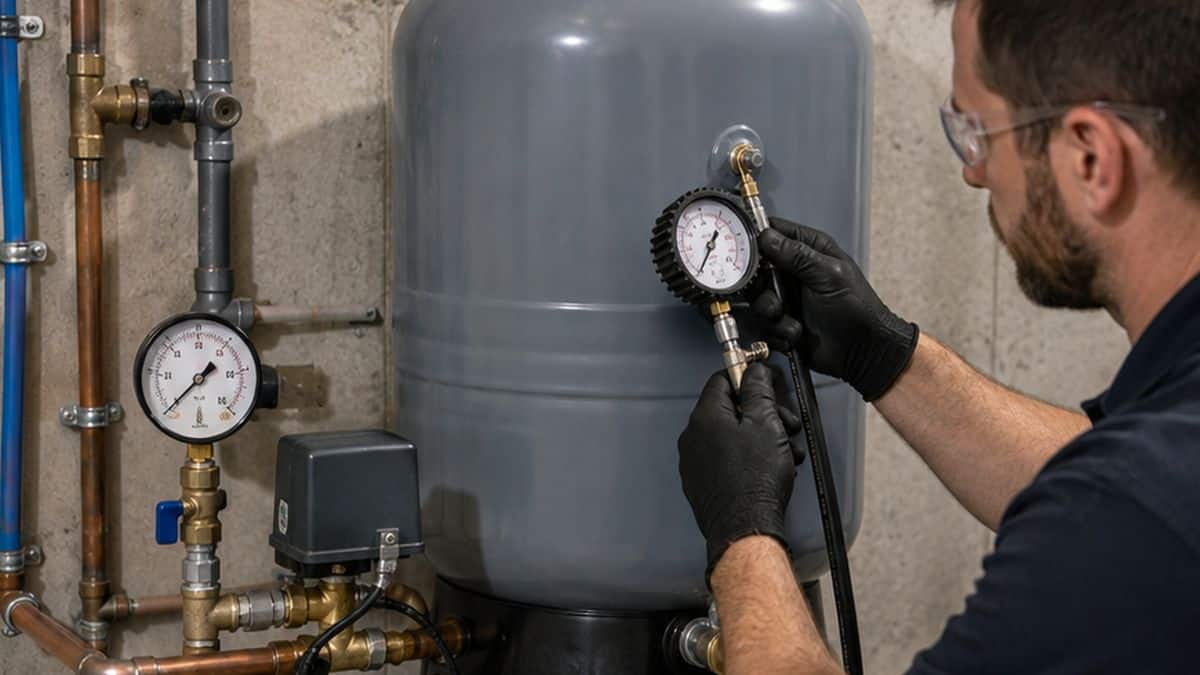
A close-up shows precharge testing during Pressure Tank Installation & Replacement in Edmonton. Accurate air pressure is an important part of dependable Pressure Tank Installation.
Common mistakes
- Skipping the pump shut-off and getting waterlogged tanks
- Over- or under-charging air side, leading to frequent cycling
- Forgetting to test under load after adjustment
A correctly precharged tank will reduce the number of pump starts by up to 50 percent, extending pump life and cutting energy use. Good news, this is simpler than it sounds if you follow the step-by-step guide above.
Select the appropriate tank style
Not all pressure tanks are created equal. Picking the wrong style can shorten service life or increase maintenance.
| Style | Pros | Cons | Typical cost (Edmonton) |
|---|---|---|---|
| Bladder tank | Separate water and air, minimal waterlogging | Bladder can fail over time | $200–$500 for 20–80 gallon |
| Diaphragm tank | Durable seal, consistent performance | Higher cost for large sizes | $200–$500 for 20–80 gallon |
| Air-over-water | Lower upfront cost | Waterlogging, more maintenance | $100–$300 for basic models |
Tips for choosing
- Bladder or diaphragm style for low maintenance
- Air-over-water only if budget is tight and you can schedule regular checks
- Match tank certification marks (CSA or CSA B51) before purchase (Environment and Climate Change Canada)
Urban winters can stress tank components, so a bladder or diaphragm tank—a sealed system—is often the smarter choice in Edmonton’s freeze-thaw cycles.
Follow local code and permit requirements
Skipping permits can lead to fines, forced removal of work, or unsafe installations. In Edmonton, you need a plumbing permit for installing or altering plumbing equipment, including pressure tanks and associated piping (City of Edmonton).
Permit essentials
- Submit plans before work begins, changes require resubmission
- Licensed contractors hold the proper certificates (Restricted “R” or Private Sewage “PS”) from the Government of Alberta
- Inspections verify the installation matches approved plans
Common pitfalls
- Installing without a permit (risk of a stop-work order)
- Deviating from reviewed plans on site
- Hiring installers without an Alberta certificate
If you need more guidance, see edmonton pressure tank replacement services for tips on working with certified professionals.
Protect your tank from Edmonton’s seasons
Edmonton’s climate swings from −40 °C in winter to 30 °C in summer. A well-installed tank still needs seasonal protection to avoid freeze damage and condensation issues.
Winter care
- Install in a heated space (basement or mechanical room)
- Insulate pipes and valves (use foam sleeves or heat tape)
- Drain and winterize outdoor installations
Summer care
- Check for condensation on tank surface (insulate if sweating)
- Flush sediment from tank inlet to prevent corrosion
- Verify pressure switch operation after high-demand periods
A simple insulation jacket and routine check every season can add years to your tank’s service life.
Work with qualified specialists
A DIY install may seem tempting, but mistakes cost more in the long run. Certified professionals bring experience, tools, and code knowledge.
If you’re planning a first-time setup, start here: pressure tank installation in Edmonton.
What a pro provides
- Accurate sizing and style recommendation
- Correct precharge set and pressure switch calibration
- Permits, inspections, and compliance with Alberta regulations
- Post-installation testing and a written service report
For dependable pressure tank installation in Edmonton, trust Kingstree Plumbing. Our certified team handles everything from permit pulls to final inspection.
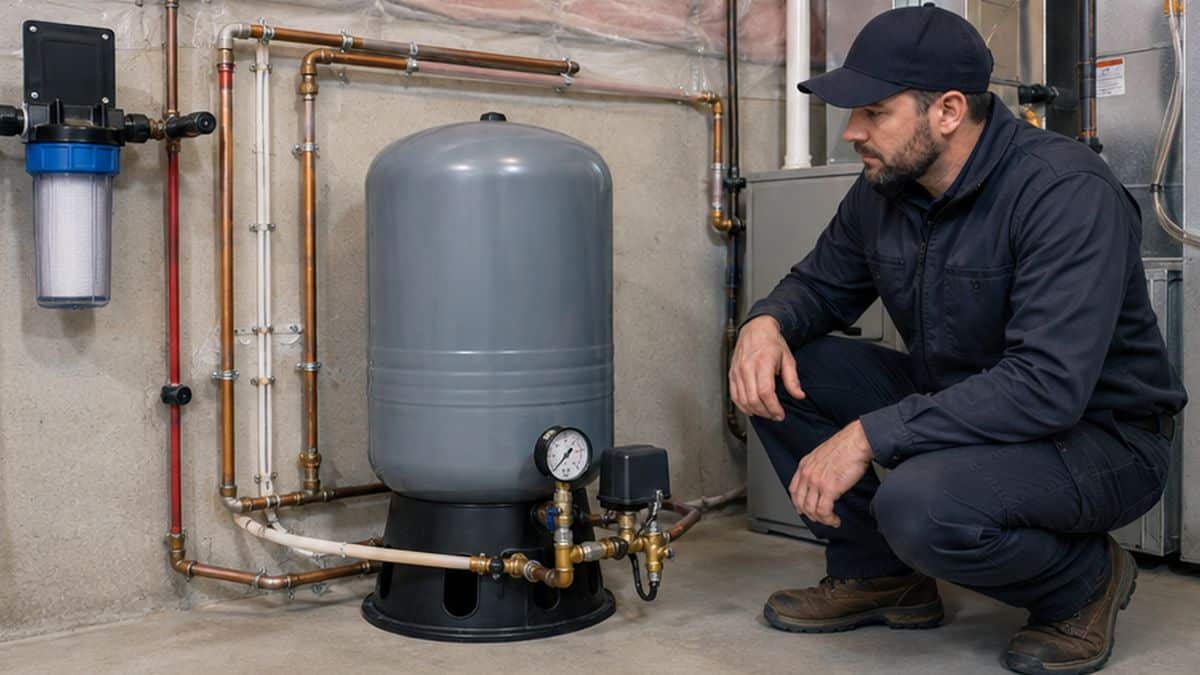
The finished Pressure Tank Installation & Replacement in Edmonton shows a clean, code-conscious mechanical-room setup. Professional Pressure Tank Installation provides an organized and reliable final result.
Next step
- Measure your pump flow and current tank size.
- Check your pump’s cut-in/cut-out pressures.
- Contact specialists for a site visit and quote.
- Book your installation and enjoy steady water pressure year-round.
More Pressure Tank Guides for Edmonton
- Pressure Tank Installation Mistakes to Avoid
- When to Replace Your Edmonton Pressure Tank
- Water Pressure Tank Mistakes to Watch For
- Finding the Right Pressure Tank Specialist
- Pressure Tank Troubleshooting Tips for Edmonton
Quick recap and next steps
- Pick the right tank size based on demand and pump flow.
- Set your precharge 2 psi below cut-in pressure.
- Choose a sealed bladder or diaphragm tank for low maintenance.
- Pull a plumbing permit and use certified installers.
- Insulate and inspect seasonally.
You’ve got this. Start by confirming your tank style and size, then reach out to professionals to handle permits and installation. A well-installed pressure tank in Edmonton means reliable water pressure near the River Valley and beyond. Need Pressure Tank Installation & Replacement in Edmonton? Call now or Book Online.
Frequently asked questions
Do I need a permit to replace a water pressure tank in Edmonton?
Yes, any installation or alteration of plumbing equipment requires a permit from the City of Edmonton. Check the application process online at the city website.
How often should I check my tank’s air charge?
Aim to test the precharge twice a year—before winter and again in late summer. A simple tire gauge on the air valve tells you if adjustment is needed.
Can I install a pressure tank outdoors in Edmonton?
Outdoor installations must be in insulated enclosures or heated sheds. Without protection, extreme cold can freeze the water and damage the bladder.
What are the signs of a failing pressure tank?
Look for rapid pump cycling, fluctuating water pressure, or visible corrosion and leaks at fittings. If you spot these, see pressure tank troubleshooting edmonton.
How long does a professional installation take?
Most installs finish within 2 to 4 hours, depending on complexity. Your installer will also handle permits and final inspections.
Good news, this is easier than it sounds. Pressure tank installation in Edmonton can cost around $500 on average to replace (though prices range from $300 to $700 depending on tank size, capacity, and labour rates) (Angi). Getting the basics right will save you time, money, and a headache down the road. Whether you’re replacing an ageing bladder tank or installing one for the first time, avoiding these common mistakes sets you up for steady water pressure and longer pump life. For expert support, you can trust Pressure Tank Installation & Replacement in Edmonton from Kingstree Plumbing.
Plan for the right tank size
Choosing the wrong tank size is one of the biggest pitfalls. An undersized tank leads to rapid pump cycling, which wears out your pump motor faster. An oversized tank can mean wasted space and unnecessary cost.
Key sizing factors
For a deeper breakdown of tank types, sizing, and how they support your well setup, read Edmonton water system pressure tanks.
- Building demand: number of bathrooms, appliances, irrigation lines
- Pump flow rate: gallons per minute (GPM) your pump delivers
- Drawdown capacity: water volume delivered between pump cycles
A general rule is to size your tank so it has enough drawdown for two or three fixture operations (for example, a shower and a sink). A 40-gallon bladder tank often serves a typical 3-bedroom home well. If you’re unsure, a qualified pro can calculate drawdown using your pump specs.
Cost context
Replacing a well pressure tank in Edmonton averages $500, but ranges from $300 to $700 (Angi). Investing in the right size upfront can cut repair and energy costs over the tank’s 10 to 15-year lifespan.
Good news, sizing doesn’t have to be guesswork. Take measurements of your existing equipment and use manufacturer tables or ask your installer to confirm the best fit.
Verify precharge and pressure settings
Even a perfectly sized tank will underperform if the air charge isn’t set correctly. Most bladder or diaphragm tanks require a precharge 2 psi below your pump’s cut-in pressure.
If you want a pro to confirm your cut-in/cut-out settings and dial it in correctly, contact Edmonton water pressure tank specialists.
How to set precharge
- Turn off power to the pump.
- Drain water from the tank until the gauge reads zero.
- Use a tire gauge on the tank’s air valve.
- Add or release air to reach the target psi (pump cut-in minus 2 psi).
- Restore power and check pressure switch settings.
Common mistakes
- Skipping the pump shut-off and getting waterlogged tanks
- Over- or under-charging air side, leading to frequent cycling
- Forgetting to test under load after adjustment
A correctly precharged tank will reduce the number of pump starts by up to 50 percent, extending pump life and cutting energy use. Good news, this is simpler than it sounds if you follow the step-by-step guide above.
Select the appropriate tank style
Not all pressure tanks are created equal. Picking the wrong style can shorten service life or increase maintenance.
| Style | Pros | Cons | Typical cost (Edmonton) |
|---|---|---|---|
| Bladder tank | Separate water and air, minimal waterlogging | Bladder can fail over time | $200–$500 for 20–80 gallon |
| Diaphragm tank | Durable seal, consistent performance | Higher cost for large sizes | $200–$500 for 20–80 gallon |
| Air-over-water | Lower upfront cost | Waterlogging, more maintenance | $100–$300 for basic models |
Tips for choosing
- Bladder or diaphragm style for low maintenance
- Air-over-water only if budget is tight and you can schedule regular checks
- Match tank certification marks (CSA or CSA B51) before purchase (Environment and Climate Change Canada)
Urban winters can stress tank components, so a bladder or diaphragm tank—a sealed system—is often the smarter choice in Edmonton’s freeze-thaw cycles.
Follow local code and permit requirements
Skipping permits can lead to fines, forced removal of work, or unsafe installations. In Edmonton, you need a plumbing permit for installing or altering plumbing equipment, including pressure tanks and associated piping (City of Edmonton).
Permit essentials
- Submit plans before work begins, changes require resubmission
- Licensed contractors hold the proper certificates (Restricted “R” or Private Sewage “PS”) from the Government of Alberta
- Inspections verify the installation matches approved plans
Common pitfalls
- Installing without a permit (risk of a stop-work order)
- Deviating from reviewed plans on site
- Hiring installers without an Alberta certificate
If you need more guidance, see edmonton pressure tank replacement services for tips on working with certified professionals.
Protect your tank from Edmonton’s seasons
Edmonton’s climate swings from −40 °C in winter to 30 °C in summer. A well-installed tank still needs seasonal protection to avoid freeze damage and condensation issues.
Winter care
- Install in a heated space (basement or mechanical room)
- Insulate pipes and valves (use foam sleeves or heat tape)
- Drain and winterize outdoor installations
Summer care
- Check for condensation on tank surface (insulate if sweating)
- Flush sediment from tank inlet to prevent corrosion
- Verify pressure switch operation after high-demand periods
A simple insulation jacket and routine check every season can add years to your tank’s service life.
Work with qualified specialists
A DIY install may seem tempting, but mistakes cost more in the long run. Certified professionals bring experience, tools, and code knowledge.
If you’re planning a first-time setup, start here: pressure tank installation in Edmonton.
What a pro provides
- Accurate sizing and style recommendation
- Correct precharge set and pressure switch calibration
- Permits, inspections, and compliance with Alberta regulations
- Post-installation testing and a written service report
For dependable pressure tank installation in Edmonton, trust Kingstree Plumbing. Our certified team handles everything from permit pulls to final inspection.
Next step
- Measure your pump flow and current tank size.
- Check your pump’s cut-in/cut-out pressures.
- Contact specialists for a site visit and quote.
- Book your installation and enjoy steady water pressure year-round.
More Pressure Tank Guides for Edmonton
- Pressure Tank Installation Mistakes to Avoid
- When to Replace Your Edmonton Pressure Tank
- Water Pressure Tank Mistakes to Watch For
- Finding the Right Pressure Tank Specialist
- Pressure Tank Troubleshooting Tips for Edmonton
Quick recap and next steps
- Pick the right tank size based on demand and pump flow.
- Set your precharge 2 psi below cut-in pressure.
- Choose a sealed bladder or diaphragm tank for low maintenance.
- Pull a plumbing permit and use certified installers.
- Insulate and inspect seasonally.
You’ve got this. Start by confirming your tank style and size, then reach out to professionals to handle permits and installation. A well-installed pressure tank in Edmonton means reliable water pressure near the River Valley and beyond. Need Pressure Tank Installation & Replacement in Edmonton? Call now or Book Online.
Frequently asked questions
Do I need a permit to replace a water pressure tank in Edmonton?
Yes, any installation or alteration of plumbing equipment requires a permit from the City of Edmonton. Check the application process online at the city website.
How often should I check my tank’s air charge?
Aim to test the precharge twice a year—before winter and again in late summer. A simple tire gauge on the air valve tells you if adjustment is needed.
Can I install a pressure tank outdoors in Edmonton?
Outdoor installations must be in insulated enclosures or heated sheds. Without protection, extreme cold can freeze the water and damage the bladder.
What are the signs of a failing pressure tank?
Look for rapid pump cycling, fluctuating water pressure, or visible corrosion and leaks at fittings. If you spot these, see pressure tank troubleshooting edmonton.
How long does a professional installation take?
Most installs finish within 2 to 4 hours, depending on complexity. Your installer will also handle permits and final inspections.
Share This Story, Choose Your Platform!
About the Author: Brett Kingstree

Related Posts