


Avoid These Mistakes with Edmonton Water System Pressure Tanks
If you’ve ever woken up to low water pressure on a frigid Edmonton morning, you know how crucial reliable edmonton water system pressure tanks can be. EPCOR’s low water pressure troubleshooting guide notes that frozen pipes and partially closed shut-off valves can be common causes during cold snaps. From the North Saskatchewan river valley to the tree-lined streets of Strathcona, your home depends on a steady flow of water for showers, irrigation, and everyday chores. A typical bladder-style tank can last 15 to 20 years, while older air-over-water models often need replacement after six to eight years (Team Austin). Good news, avoiding common mistakes up front can keep your system humming through winter freezes and summer peak use. For expert help from start to finish, see Pressure Tank Installation & Replacement in Edmonton.
Key idea: By understanding what makes these tanks tick, sizing them correctly, installing them properly, and spotting early warning signs, you’ll avoid costly repairs and unexpected cold showers.
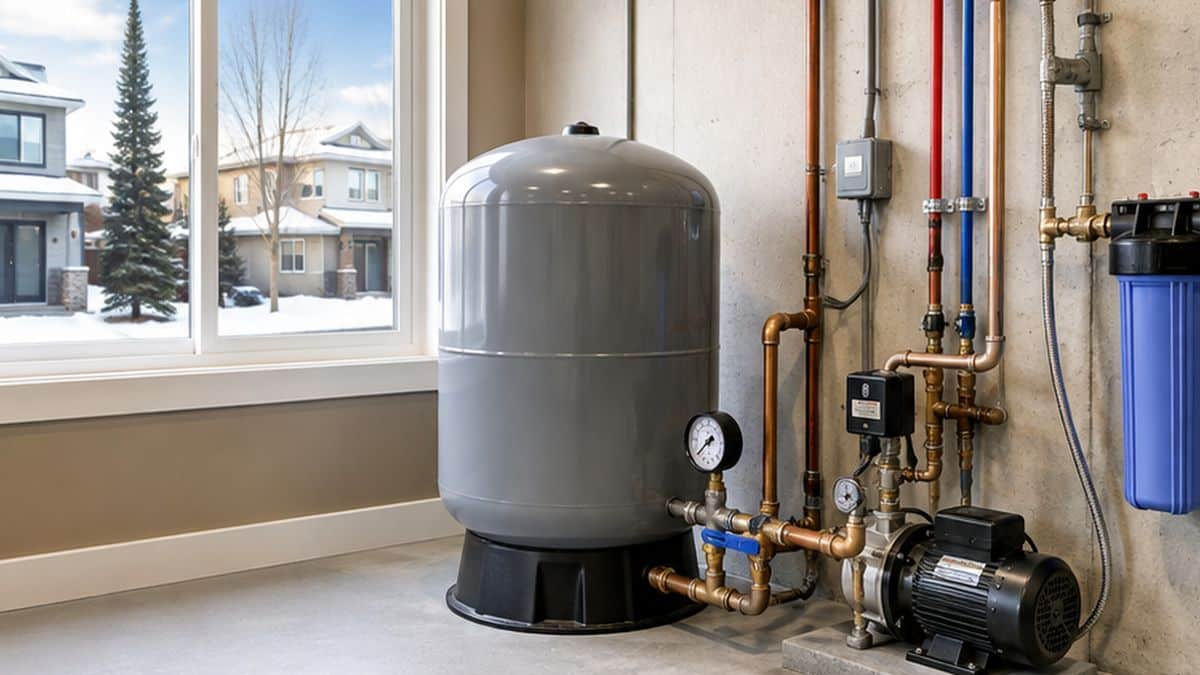
Pressure Tank Installation & Replacement in Edmonton includes checking precharge and fittings on Water System Pressure Tanks before problems develop.
Understand pressure tank basics
Pressure tanks store water under compressed air, so when you open a tap, water flows instantly without firing up the pump each time. In well water systems, they prevent rapid cycling of the pump, which can wear it out prematurely and drive up your power bill (Sego). Here are the main styles you’ll encounter:
- Air-over-water (AOW): a single chamber where water and air mix. These tanks are often galvanized steel and prone to rust, leading to waterlogging issues. They last about six to eight years and need regular air recharge.
- Diaphragm: a flexible rubber barrier isolates air and water. They deliver more consistent pressure than AOW tanks but can wear out if the diaphragm weakens.
- Air volume control (AVC): popular in the late 1980s and early 1990s, these added devices to auto-inject air, aiming for low maintenance. In practice, they often need bleeding and check-ups more than promised.
- Bladder style: a rubber bladder fully separates air and water, preventing oxygen from diluting your water and inhibiting corrosion. These tanks are the most efficient, require almost no maintenance, and can last up to two decades.
A 2023 study of rural Alberta homes found that systems with bladder style tanks had 40 percent fewer pump failures over ten years, compared to AOW models. That means fewer service calls during Edmonton’s cold snaps.
Avoid sizing errors
Getting the wrong tank size leads to frequent pump cycling, higher energy use, and premature component wear. Your tank’s “precharge” (air pressure with no water) must match your pump’s cut-in pressure, typically 30 to 40 psi. Here’s a quick reference table:
| Tank capacity (gallons) | Cut-in pressure (psi) | Cut-out pressure (psi) | Ideal pump size (HP) |
|---|---|---|---|
| 20 | 30 | 50 | 0.5 – 1 |
| 40 | 30 | 50 | 1 – 1.5 |
| 80 | 30 | 50 | 1.5 – 2 |
| 119 | 30 | 50 | 2 – 3 |
To size your tank:
- Check your pump’s cut-in and cut-out pressures.
- Match the precharge to the cut-in setting (pump off, tank empty).
- Choose a tank that fits your pump horsepower and household demand.
If you’re unsure, consult a certified technician or explore pressure tank installation in Edmonton. Right sizing your tank means fewer cycles, longer pump life, and stable pressure for your morning shower on Whyte Avenue.
Prevent installation mistakes
Proper placement and setup ensure safe, efficient operation. Here are common pitfalls and how to avoid them:
- Mounting too low or high: Your tank’s openings should align with the pump outlet and pressure switch. Hose clamps and fittings must be snug but not overtightened to prevent leaks.
- Ignoring local code: Edmonton’s plumbing code requires accessible shutoff valves, pressure relief, and proper mounting supports for tanks over 100 pounds. If you’re altering water piping or related plumbing components, the City of Edmonton plumbing permit guidance explains when a permit is required under the provincial Safety Codes Act.
- Skipping a vibration isolator: Pumps and tanks create vibration. Installing rubber isolators reduces noise and stress on joints.
- Overlooking electrical safety: Always turn off power before working near the pressure switch. Check wiring connections for corrosion or loose screws.
- Neglecting drainage: In Edmonton’s winter, a burst tank can flood basements. Install a secondary drain line or catch basin if space allows.
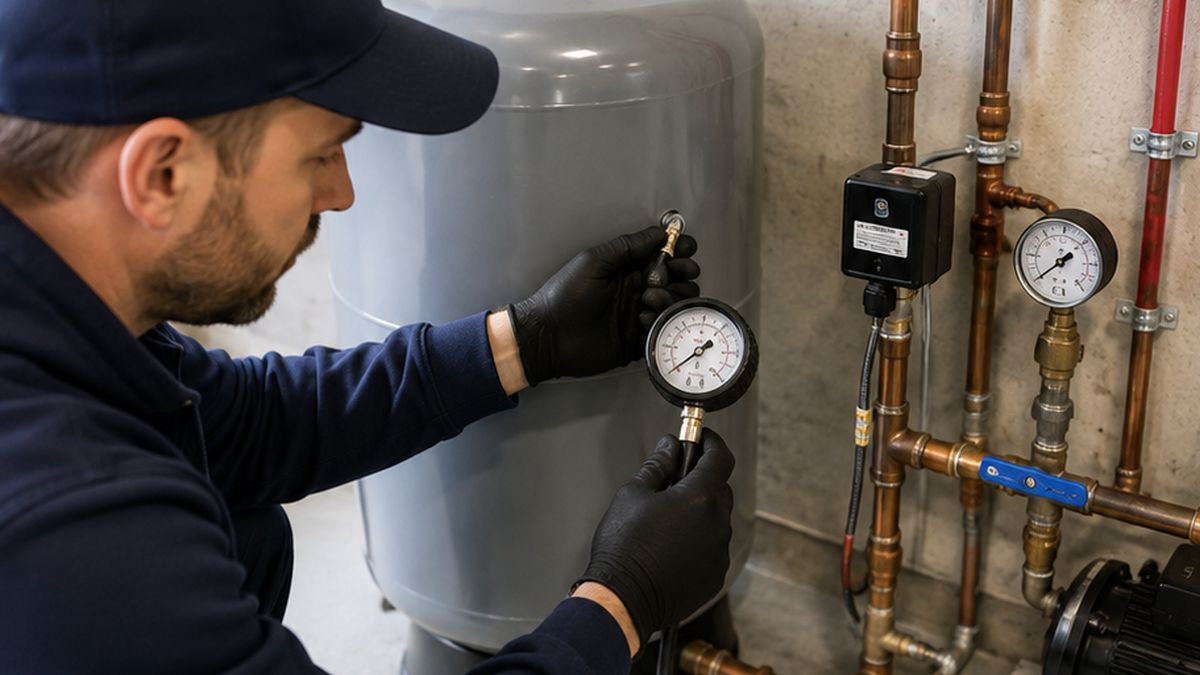
Close-up Pressure Tank Installation & Replacement work in Edmonton showing key fittings, controls, and Water System Pressure Tanks setup details.
Taking these steps during a new setup or replacement saves you from mid-winter headaches. If you need help, browse our edmonton pressure tank replacement services to find certified pros.
Schedule timely maintenance
A little upkeep goes a long way. Plan these tasks at least once a year, ideally in spring before heavy irrigation season:
- Check tank precharge: Use a tire gauge on the Schrader valve (top of the tank) with the pump off and tank drained.
- Inspect for corrosion or leaks: Look for rust spots on AOW tanks and moisture around fittings.
- Test pressure switch operation: Open multiple faucets, listen for rapid clicking. That indicates short cycling or a waterlogged tank.
- Flush sediment: Some tanks accumulate debris that stresses the bladder. Draining a few gallons annually helps prevent damage.
Good news, most of these steps you can do yourself. If you’d rather have a pro review your system, see pressure tank troubleshooting edmonton or contact a local expert.
Spot warning signs
Catching issues early keeps your system healthy. Watch for these symptoms:
| Symptom | Possible cause | Recommended fix |
|---|---|---|
| Rapid pump cycling | Waterlogged tank or wrong precharge | Adjust air pressure or replace bladder |
| Inconsistent water pressure | Diaphragm damage or air loss | Inspect and replace diaphragm |
| Visible rust or leaks | Corroded tank shell | Replace with fiberglass or bladder style model |
| Noisy pump start/stop | Loose fittings or vibration | Tighten joints, add vibration isolator |
| Low water flow across fixtures | Undersized tank or blocked inlet | Upsize tank, clean or replace inlet filter |
If multiple taps show weak flow, or if you hear quick successions of clicking, your tank likely needs attention. Addressing these signs before they worsen avoids emergency callouts in the dead of winter.
Conclusion and next steps
Keeping your Edmonton home’s water flowing smoothly comes down to choosing the right tank, installing it correctly, and staying on top of maintenance. Whether you’re near the ice sculptures at City Hall or winding down in Mill Woods, a well-maintained system brings peace of mind. Need pressure tank installation & replacement in Edmonton? Call now or Book Online.
Ready for reliable water pressure? Schedule your inspection today with edmonton water pressure tank specialists or explore our edmonton pressure tank replacement services. You’ve got this, and your water system thanks you.
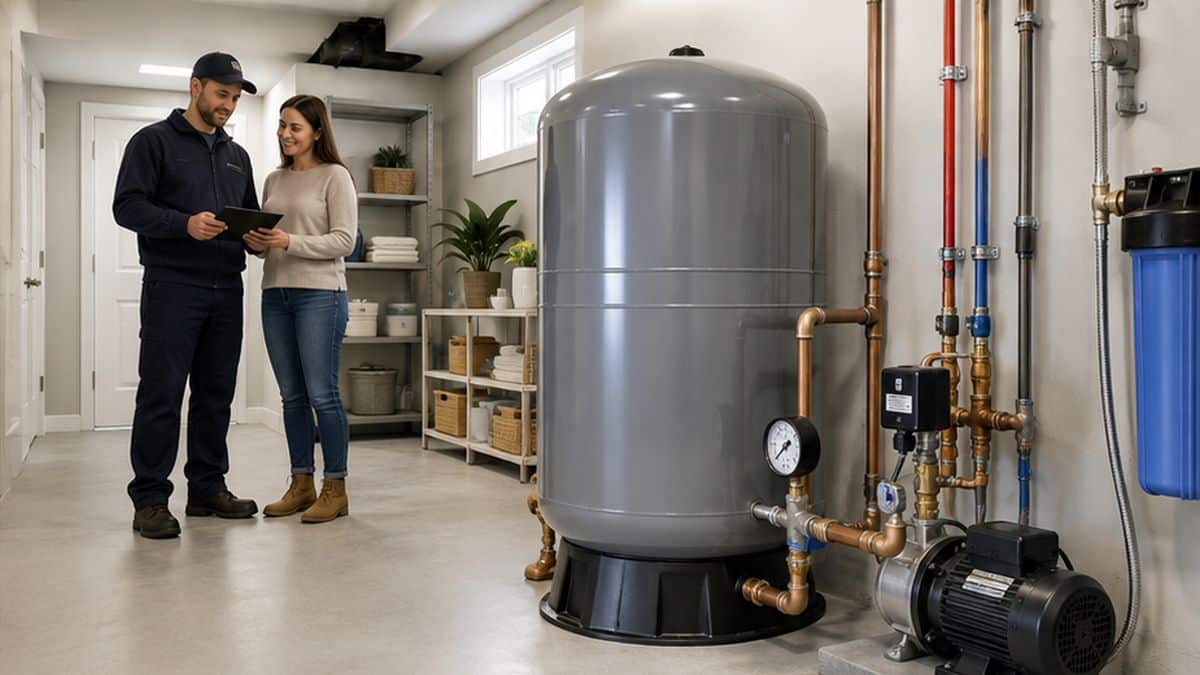
Completed Pressure Tank Installation & Replacement in Edmonton showing reliable Water System Pressure Tanks in a clean, organized utility room.
More Pressure Tank Resources for Edmonton
- Pressure Tank Installation Tips and Mistakes
- Choosing a Pressure Tank Replacement Service
- Avoid Common Water Pressure Tank Problems
- Choosing an Edmonton Pressure Tank Specialist
- Essential Pressure Tank Troubleshooting Tips
FAQ
How often should I service my pressure tank?
Plan an annual check of precharge and fittings, ideally each spring before heavy irrigation or summer showers.
Can I adjust the tank’s air pressure myself?
Yes, with a simple tire gauge and compressor or hand pump. Always drain the tank fully and turn off the pump first.
What size tank do I need for a typical Edmonton home?
Most 1 to 1.5 HP pumps pair well with a 40–80 gallon tank. Match cut-in pressure and household demand for best results.
Why is my pump short cycling in winter?
Cold weather can cause trapped water to condense in the tank’s air chamber, leading to rapid cycling. Check precharge and insulation.
Is a bladder style tank worth the extra cost?
Bladder tanks separate air and water completely, reducing corrosion and maintenance. They often last twice as long as air-over-water models.
Share This Story, Choose Your Platform!
About the Author: Brett Kingstree

Related Posts