


Protect Your Investment: Edmonton Irrigation System Winterization
Winterizing your irrigation system in Edmonton is crucial for protecting your pipes and sprinkler heads when temperatures plummet. Edmonton irrigation system winterization prevents water in the lines from freezing and expanding, which can cause cracks and burst pipes. You’ll avoid costly spring repairs and ensure your landscape springs back to life on cue. Good news, setting up a solid winterization plan is more straightforward than it sounds. In this guide, you’ll learn the when, what, and how of winterizing your irrigation network. If you prefer hands-off, our certified team at Kingstree Plumbing delivers complete winterization services to Edmonton-area homeowners.
Edmonton’s winters can dip below –25°C, making unmanaged water in your system a liability. From suburban yards to downtown greenspaces near Jasper Avenue, winterization is your best defense. Whether you’re a new homeowner in Rutherford or maintain a landscape by the North Saskatchewan River, these steps will keep your system intact through snow and ice. Ready to get started? Let’s dive into the key steps you need to protect your investment.
Protecting your irrigation investment
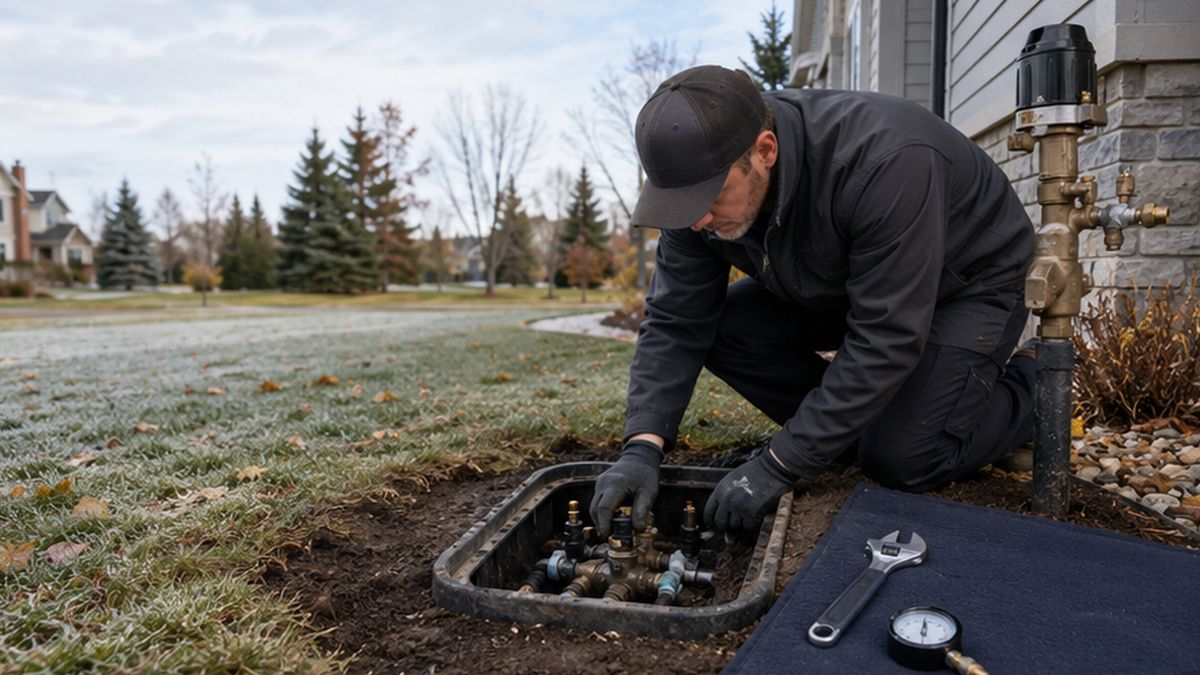
Irrigation system Maintenance, Service & Repair in Edmonton includes inspecting valves and leaks before Irrigation System Winterization.
An unprotected irrigation system is at risk every winter. Draining an irrigation system before freeze-up can prevent damage from ice expansion and costly repairs down the line (Home Depot). In Edmonton, where average lows slip to –15°C or lower, trapped water turns into ice inside pipes, valves, and sprinkler heads. That ice expands, leading to cracked fittings and broken lines that can cost hundreds to repair. You’ll spend more fixing damages in spring than you would on a full winterization service.
Winterizing isn’t just about saving money. It also preserves your system’s lifespan. Corrosion and mineral build-up accelerate when moisture sits in the network. Running a winterization routine each year keeps parts dry and helps ensure your system delivers consistent coverage when you need it. By investing in proper winter care, you lock in peace of mind and smooth operation come spring. Landscape professionals often note that a well-maintained system can last up to 15 years with annual winterization, compared to just 8–10 years if neglected. You’ll find that winterizing is a small time investment that has big returns on reliability and durability.
Timing your winterization
Edmonton’s fall weather can surprise you. Nights often dip below freezing by mid-October, though daytime highs may still reach 10°C. It’s best to schedule your winterization before the temperature consistently falls under 0°C. Aim for late September or early October, shortly after your last scheduled watering. For a data-backed benchmark, see Edmonton climate normals (Government of Canada).
Forecasts near the river valley can show frost earlier than other parts of the city. Good news, early scheduling avoids the rush of last-minute requests that plumbing and irrigation pros receive in late October. Most service providers open winterization slots in mid-September. Booking early can lock in your preferred time slot and avoid weekend surcharges.
Watch the forecast for overnight lows and aim to winterize when your grass and soil are dry. A dry system flushes more completely. If you wait until the first hard freeze, ice crystals might already have formed inside valves and pipes, making them harder to clear. By acting proactively, you’ll protect your network before cold grips the ground. If you want an additional local planning tool, the Government of Alberta provides estimated probable freezing dates by location and temperature threshold.
Inspecting and repairing leaks
Before you drain your irrigation lines, take time to inspect the system for leaks and wear. Fixing minor issues now ensures a more effective winterization and helps you avoid hidden water loss.
Spotting leaks
- Walk each zone with the controller turned off and look for wet patches.
- Check around valve boxes and backflow preventers for puddles.
- Note unusually lush turf areas that could signal a slow leak.
A 2021 study by a Canadian landscape association found that over 20% of residential irrigation systems leak at some point during the season. That slow drip can freeze and worsen in winter.
Fixing minor issues
Tackle straightforward repairs yourself if you have basic tools. Replace worn washers, tighten loose pipe joints, and swap out cracked heads. Many sprinkler heads screw off with a standard multi-tool. After repairs, run a brief test cycle to confirm even pressure across all heads. A balanced system drains more completely and reduces the risk of trapped water. If you encounter a stubborn leak or broken pipe section, consider affordable irrigation system repair edmonton to lock in a reliable fix.
Ensure you also inspect buried valve boxes for debris. Sand, leaves, and small rocks can block drainage when you open manual ports later. Clearing the box area is a quick step that pays off during blowouts or drainage.
Shutting off water and controls
With leaks addressed, the next step is stopping new water from entering the system. This prevents fresh water from freezing after you drain existing lines.
Turn off the main supply
Locate your irrigation shut-off valve, often found near your main water line or by the meter. Turn the handle clockwise until it stops. This stops water flow into your irrigation network. In older Edmonton homes, you may need a T-key or an adjustable wrench to turn off the shut-off valve. Label your valve box lid so you and future homeowners can find it easily next season.
Pause your controller
Access your irrigation controller (inside or in a weatherproof outdoor box). Switch it to “rain mode” or “off.” This prevents scheduled cycles from running and keeps the electrical components safe over winter. If you have a smart controller, simply disable the irrigation schedule in the mobile app. Once the main supply and controller are off, open any downstream manual drain valves to relieve residual pressure. Ensuring the system is depressurized makes subsequent draining steps safer and more thorough.
Draining water from lines
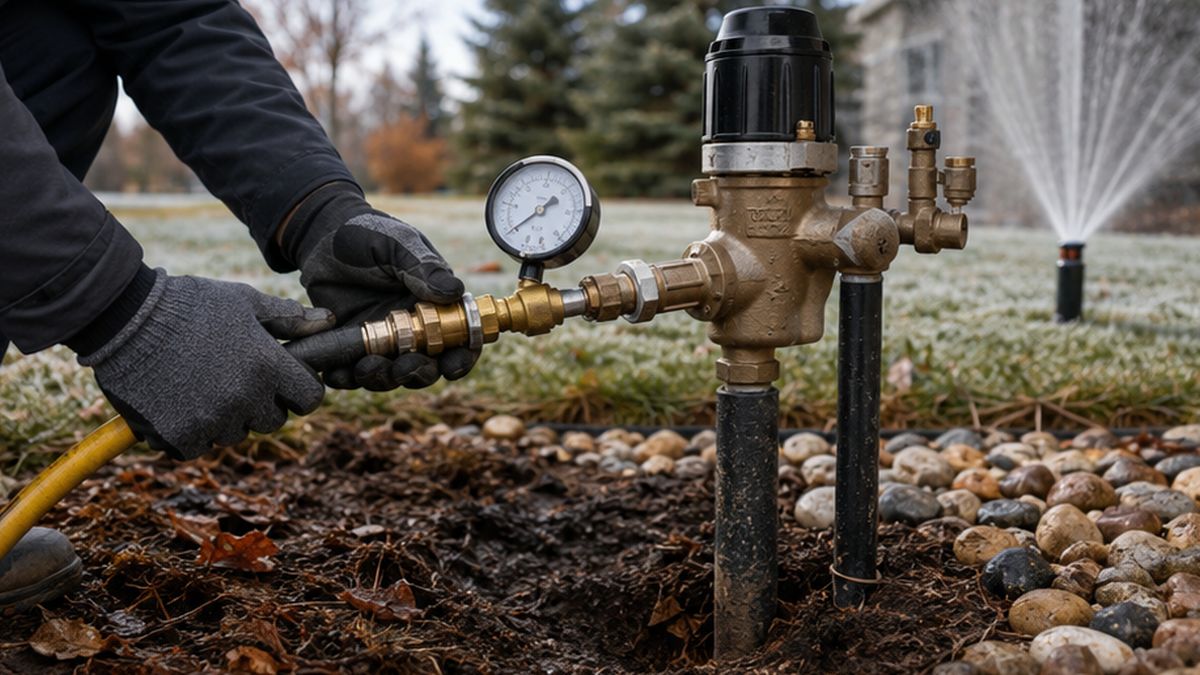
Irrigation system Maintenance, Service & Repair in Edmonton uses a controlled blowout for thorough Irrigation System Winterization.
Removing water from pipes is the heart of winterization. Edmonton homeowners typically choose one of three methods, each suited to different systems and skill levels. Below is a comparison to help you decide.
| Method | Pros | Cons |
|---|---|---|
| Manual drain valves | Simple, no special tools | Time-consuming for many zones |
| Automatic drain valves | Hands-off after valve closure | May not clear all residual water |
| Blowout method | Fast, thorough removal | Requires air compressor and caution |
Manual drain valves
Manual drains are small ports on your pipes. Open each port one at a time and let water flow out. Close the port once the stream stops. This low-tech method is reliable but can take 30–60 minutes for a typical home system.
Automatic drain valves
If your system has built-in automatic valves, they activate when system pressure falls below a threshold. After shutting off the main supply, wait 10–15 minutes for water to drain out. Automatic drains reduce hands-on time but may leave pockets of water in low spots.
Blowout method
The blowout method pushes water out with compressed air. A Naiad Irrigation Systems guide recommends air pressure between 50 and 80 psi. Follow these steps:
- Connect your compressor to the backflow preventer riser.
- Open the first zone valve to let air in and water out.
- Run until no moisture emerges (usually under 1 minute per zone).
- Close that valve and move to the next zone.
- Repeat for all zones, then bleed off remaining pressure.
You’ll find this method fast and thorough. However, avoid exceeding 80 psi to prevent damaging sprinkler heads or PVC fittings. If you lack a compressor or are unsure about pressure settings, hiring a professional is safer.
Insulating above-ground parts
Even after draining, pockets of residual water can freeze in exposed components. Insulating these parts adds an extra layer of protection.
- Backflow preventers: Cover with a foam jacket designed for irrigation backflow models.
- Valves and manifolds: Wrap with self-adhesive foam tape and secure with weatherproof electrical tape.
- Exposed pipes: Slide foam pipe insulation over any above-ground sections, then seal joints with waterproof tape.
- Controller housing: If your controller is outdoors, insulate the box or bring the unit inside.
A 2020 review by a Canadian landscaping forum noted that proper insulation cuts freeze-related damage claims by over 60%. You’ll spend $20–$50 on insulation supplies, a modest outlay compared to repair costs. Inspect insulation after heavy snow. A buildup can slip or compress insulation, so secure covers firmly and recheck after big storms.
DIY vs professional help
Deciding between a DIY winterization and hiring an expert depends on your comfort level, equipment, and the complexity of your irrigation network.
| Factor | DIY approach | Professional service |
|---|---|---|
| Equipment needed | Wrench, manual valves | Industrial-grade compressor |
| Skill level | Basic plumbing and tools | Certified technicians |
| Time commitment | 2–4 hours for most homes | 30–60 minutes with prep time |
| Risk of damage | Higher if unfamiliar | Low, with proper pressure control |
| Peace of mind | Moderate | High, with documented service record |
| Cost (Edmonton rates) | $0–50 for parts | $80–200 per service call |
Risks of DIY
If you’re new to irrigation work, it’s easy to overpressure pipes during a blowout. That can lead to cracked fittings or warped heads. Missing a hidden leak at the start also traps water you’ll never clear. You’ll find step-by-step guides online, but each system has quirks.
Benefits of professional help
Professional irrigation winterization comes with several advantages:
- Technicians use calibrated pressure gauges to avoid overblowing.
- Annual service records help with insurance claims and warranty requirements.
- Pros carry foam jackets and a full toolset for insulation and valve work.
- Certified teams often perform a free pre-winter inspection of your system.
If you’d rather avoid the learning curve, check out our professional irrigation system maintenance edmonton packages. You’ll get a thorough winterization and written confirmation that your system is winter-ready.
Kingstree’s winterization service
At Kingstree Plumbing, our Irrigation Association-certified technicians handle every step. We’ll inspect for leaks, perform a controlled blowout, insulate all above-ground parts, and test your controller. Our team covers Edmonton neighborhoods from Bonnie Doon to Griesbach. You’ll receive a detailed report and a guarantee that your system is in prime winter condition.
More Edmonton irrigation resources
- Cost-conscious irrigation repair solutions
- Why professional irrigation care matters
- Steps to protect sprinklers from freezing
- Keeping your irrigation system in top shape
- Diagnose common sprinkler system issues
Reactivating in spring
Once Edmonton’s overnight lows stay above 0°C, it’s time to bring your irrigation back online. Follow this spring startup checklist to avoid delays and surprises.
- Remove or uncover all insulation and vents.
- Turn on the main water supply slowly, listening for leaks.
- Switch your controller from rain mode to its active program.
- Manually open any closed drain valves to restore normal pressure.
- Run each zone for 5 minutes, checking heads for even spray patterns and leaks.
- Adjust nozzle direction and spacing for full coverage.
- Inspect the backflow preventer for tight seals and no signs of frost cracks.
- Flush the system by running a fast cycle, allowing any debris to clear from lines.
A local gardener’s tip: test one zone at a time near the river valley where spring snowmelt can carry silt into your lines. You’ll spot clogs early and avoid widespread blockages. If you notice pressure loss or irregular sprays, refer back to edmonton irrigation system troubleshooting. Good news, early detection now prevents major headaches later in the season. For a hassle-free spring tune-up, book edmonton irrigation system maintenance.
Common mistakes to avoid
Even well-intentioned homeowners can fall into these traps:
- Waiting for a hard freeze before starting winterization.
- Using too much air pressure during the blowout (over 80 psi).
- Forgetting to open manual drain valves after shutting off water.
- Neglecting insulation on backflow preventers, valves, and exposed piping.
- Skipping a pre-winter inspection for leaks or clogged heads.
- Failing to pause or check your controller, leading to accidental watering.
- Assuming automatic drains clear every last drop of water.
By staying ahead of these pitfalls, you’ll extend your system’s lifespan and avoid emergency fixes when the snow melts.
Local tips for Edmonton homeowners
Edmonton’s climate and landmarks bring unique winterization considerations:
- Chinook winds can cause freeze-thaw cycles, so choose a snug insulation fit.
- Heavy snowfalls near West Edmonton Mall or the river valley can bury your valve boxes. Mark their locations with flags or stakes.
- Ice pellet storms may damage exposed heads. Cover them if a rare winter rain occurs.
- In neighbourhoods like Heritage Valley, low-lying areas may flood during snowmelt—ensure correct drainage around your system.
- Keep an eye on community events such as the Ice on Whyte festival. Plan winterization so equipment is in place when frost-themed celebrations begin.
Good news, with the right prep you’ll enjoy a lawn that springs back to life despite our long winters.
Conclusion
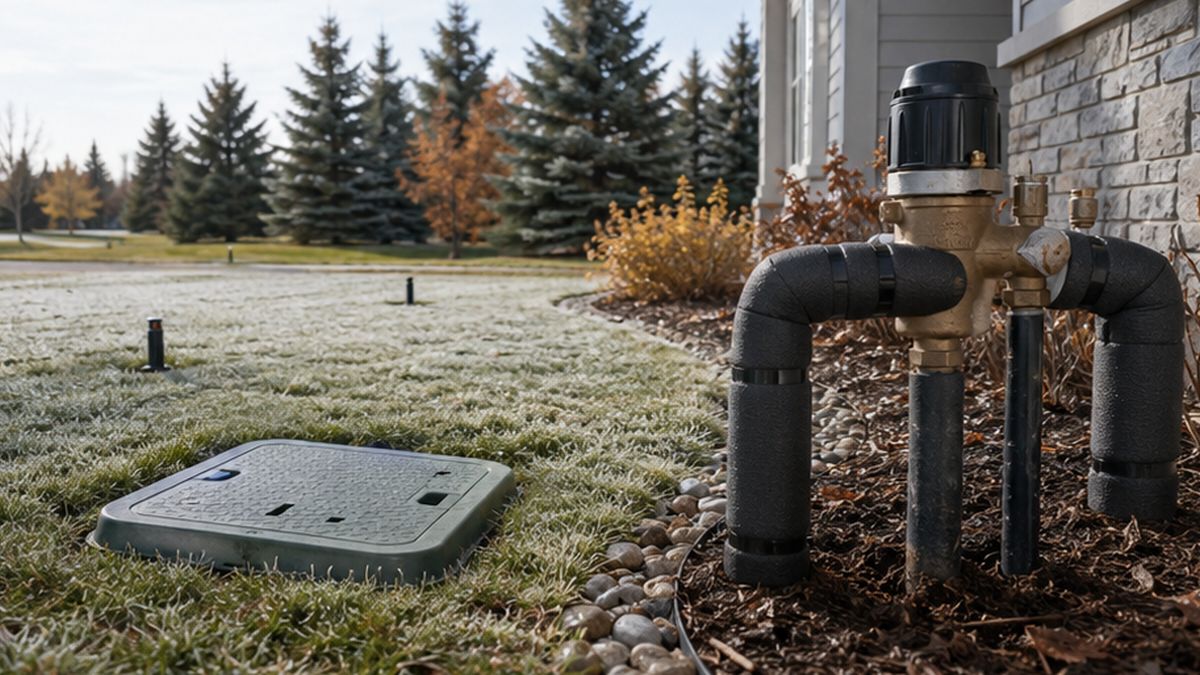
Irrigation system Maintenance, Service & Repair in Edmonton delivers a protected, clean result after Irrigation System Winterization.
A thorough Edmonton irrigation system winterization shields your pipes, valves, and sprinkler heads from freeze damage. By inspecting for leaks, shutting off water, draining lines, and insulating exposed parts, you’ll save on spring repairs and ensure a fast start when the thaw arrives. You’ve got the steps; now it’s time to act. Need Irrigation system Maintenance, Service & Repair in Edmonton? Call now or Book Online.
Frequently asked questions
When should I winterize my irrigation system in Edmonton?
Aim to winterize in late September or early October, before overnight temperatures consistently drop below freezing. Early action prevents ice buildup in valves and pipes.
Can I winterize my irrigation system myself?
Yes, if you’re comfortable with basic plumbing tasks, a manual drain, and controlled blowout procedure. If you prefer no hassle, a professional service ensures proper pressure and insulation.
What happens if I don’t winterize my irrigation system?
Water left in pipes will freeze, expand, and crack fittings and sprinkler heads. Repairing these damages in spring often costs more than a winterization service.
How long does the blowout method take?
Most residential systems clear in under 60 minutes with an industrial-grade compressor, depending on the number of zones. Using 50–80 psi minimizes risk of damage.
How much does winterization cost in Edmonton?
Professional winterization services generally range from $80 to $200, based on system size and method. DIY costs are mostly limited to supplies like foam insulation and wrenches.
Share This Story, Choose Your Platform!
About the Author: Brett Kingstree

Related Posts




